
AI and Circadian Rhythms: Blocking Productive Hours Before They Slip Away

If you've ever wondered how AI circadian rhythms productivity can revolutionize your workday, you're in the right place. This isn't about trends or tech gimmicks: it's about leveraging when your body and mind are at their best to perform. Artificial intelligence can be the ally you need to identify and safeguard those peak concentration hours, preventing them from getting lost in interruptions or tasks that can wait.
Why Circadian Rhythms Matter More Than You Think for Your Productivity
Most people don't work at 100% all day long. This isn't laziness or lack of commitment; it's pure biology. Circadian rhythms are those internal cycles that regulate our sleep, energy, and concentration over 24 hours. Ignoring them is like trying to run a marathon without training: exhausting and ineffective.
If you understand when you're most alert and when you need a break, you can organize your work to be more efficient. This is where AI circadian rhythms productivity comes in, which not only detects those performance peaks but can also help you block good hours so that no one can take them away from you.
Want to know how? It's not magic or science fiction; it's data and automation at the service of your time.
How AI Detects and Protects Your Peak Performance Moments
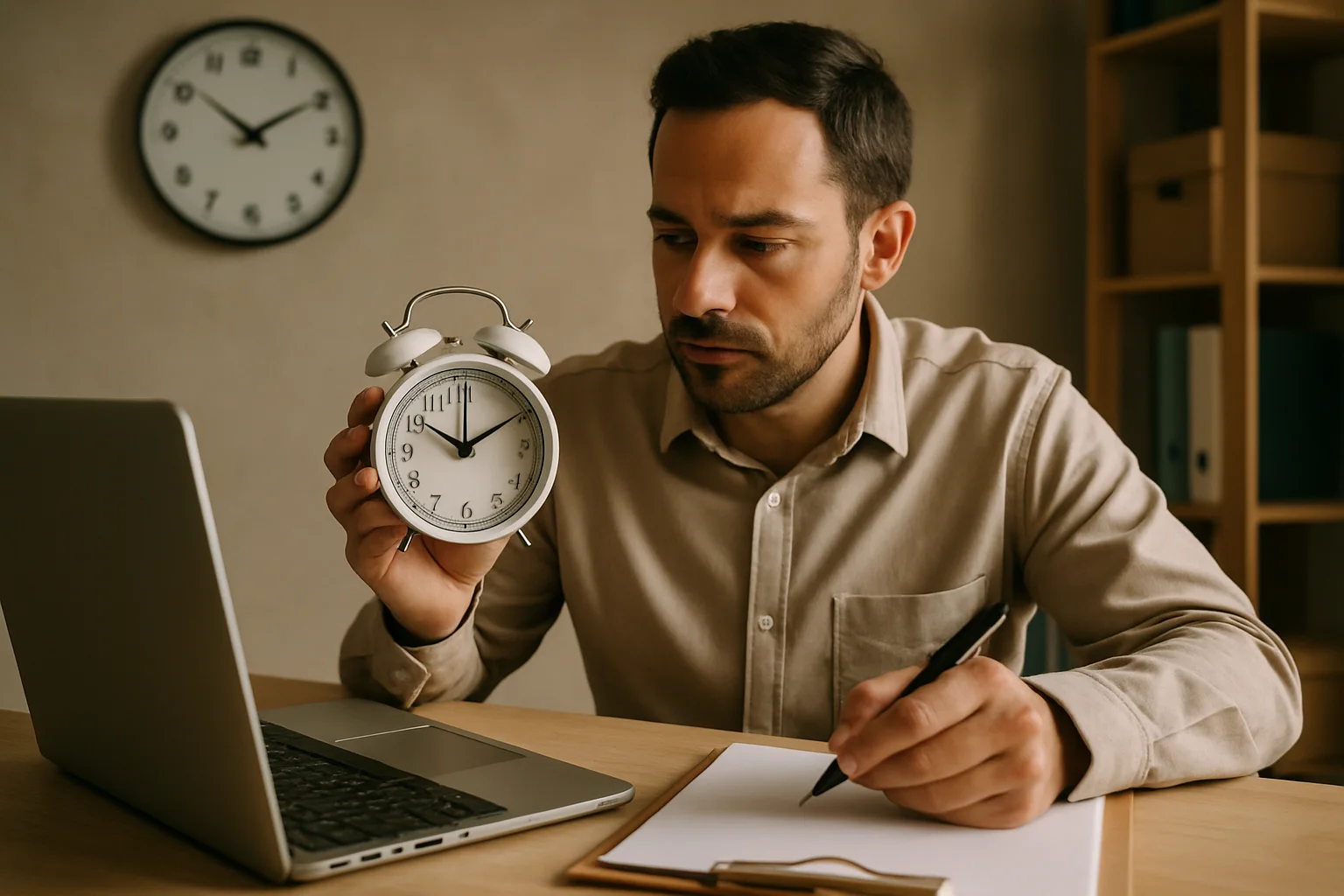
Traditionally, identifying your peak hours relied on intuition or trial and error. Today, artificial intelligence can analyze a multitude of variables: from your heart rate, sleep patterns, to how you react to different tasks at various times. It builds a personalized profile that indicates when you're at your best for work.
Once that data is collected, AI can integrate with your calendar or task management tools to automatically block those time slots. The result? Fewer interruptions, poorly timed meetings, or tasks that pull you away from your focus.
If there's one thing I've learned from using these technologies, it's that automation doesn't replace discipline, but it does make life much easier. It's not about being "on" all the time; it's about making the most of when you're truly "on."
Want to give it a try? Start by observing your own energy peaks for a week, then look for an app or system that uses AI to help you organize them.
Real Limitations and Risks of Blindly Trusting AI to Manage Your Productivity
Before you get too excited, it's important to be realistic. AI circadian rhythms productivity is not infallible or universal. Every person is unique, and while biometric and behavioral data provide a wealth of information, they don't capture all external variables: stress, changes in routine, emotional factors, or unforeseen events.
Moreover, excessive reliance on AI to manage your time can lead to a false sense of control. If you block your good hours and then don't feel productive for other reasons, the frustration can be greater. The key is to use AI as a supportive tool, not as a magic wand.
Another point to consider is privacy. For AI to work effectively, it needs sensitive personal data. If you're not clear on how that data is managed or who has access to it, it's better to be cautious.
So yes, AI can help you block your best work hours, but don't expect miraculous results without a real commitment to your habits and health. Ultimately, sustainable productivity comes from understanding your body and mind, not just algorithms.
Integrating AI and Circadian Rhythms into Corporate Culture: Does It Really Work?
In corporate environments, the idea of respecting circadian rhythms may sound utopian. However, companies that have embraced this integration have seen real benefits: less burnout, better work quality, and reduced absenteeism. AI helps personalize this strategy because not all employees have the same performance peaks.
But be careful; it's not just about technology. For it to work, corporate culture must change. Blocking good work hours means respecting those blocks, avoiding unnecessary meetings, and trusting individual responsibility. Without that commitment, AI remains a mere curiosity.
From experience, companies that combine AI with flexible hours and adapted workspaces get more out of this trend. Sometimes, technology is just the push needed to change mindsets.
Can you imagine an environment where no one bothers you when you're at your best? It may seem like a dream, but AI and circadian rhythms are making it increasingly attainable.
The Almost Invisible Nuance: How AI Can Unintentionally Alter Your Natural Rhythm
There's a detail that almost no one mentions when discussing AI circadian rhythms productivity, and that's the risk that the technology itself, in trying to optimize your day, ends up modifying your biological rhythm in unwanted ways. For example, imagine AI detects that your peak concentration time is at 10 AM and blocks that slot for complex tasks. Perfect in theory, but if you do that every day, your brain may end up conditioned to function only during that window, reducing the natural flexibility we have to adapt to unforeseen events or changes in daily life.
In other words, AI can create a kind of productive "comfort zone" that, while efficient, could limit your ability to perform outside those hours. This is especially relevant for people with variable schedules or those working in environments where interruptions are inevitable. The practical consequence is that if one day you can't respect that block, you'll feel much more disconnected and frustrated than before using AI.
A concrete example I experienced was with a colleague who implemented an AI-based app to manage his circadian rhythms. Initially, productivity increased by 30%. But after a month, he started to notice that he struggled to concentrate on tasks outside the established time frame, even during moments that previously felt natural. In the end, he had to manually readjust his calendar to regain some flexibility because the rigidity of the system was taking an emotional and mental toll.
This case shows that AI should not be used as a dictator of time, but as a flexible guide. The key is to allow the tool to learn and adapt to changes, rather than imposing fixed blocks that can end up being counterproductive.
When AI and Circadian Rhythms Clash with Social and Cultural Reality
Another aspect often left out of the debate is how the integration of AI to optimize circadian rhythms clashes with each person's social and cultural reality. For example, in cultures where the workday is rigid and breaks are scarce, trying to respect those productivity peaks can be a difficult luxury to implement. AI can detect your best hours, but if the company or family environment doesn't allow it, the system loses its meaning.
Furthermore, not all jobs allow for flexible hours. Professionals like doctors, teachers, or customer service workers have fixed schedules that may not align with their natural rhythms. In these cases, AI can help identify when it's best to rest or when to prioritize less demanding tasks, but not to block "ideal" hours for deep work.
This cultural and social clash raises a reasonable objection: to what extent can AI really improve productivity if it isn't accompanied by structural changes in organizations and society? The answer is that technology alone is not enough. A holistic approach is needed that combines AI, education on circadian rhythms, and more flexible labor policies.
The practical consequence is that to fully leverage AI in this field, it's essential for companies and individuals to work in parallel to adapt schedules, foster autonomy, and respect individual differences. Without that commitment, AI remains an underutilized or even frustrating tool.
The Risk of Over-Optimization: Can AI Turn Us into Productivity Machines?
Finally, it's worth reflecting on an ethical and psychological objection: the over-optimization of productivity through AI and circadian rhythms can lead to constant pressure to always be "at the best moment." This can increase stress and anxiety, especially in people who already struggle to disconnect or who suffer from perfectionism.
For example, if AI continuously reminds you of your performance peak and "punishes" you mentally when you don't perform during those hours, it can create an unhealthy level of self-demand. Instead of helping you flow with your natural energy, you end up trapped in a cycle of guilt and frustration.
An interesting counterexample is the approach of some professionals who combine technology with mindfulness and self-awareness practices. Instead of using AI to maximize every minute, they use it to better understand their patterns and accept that it's not always possible to be at 100%. This more human and balanced attitude avoids falling into the trap of hyper-productivity and promotes real well-being.
In summary, AI can be a powerful ally in synchronizing your work with your circadian rhythms, but the real challenge is not to get caught up in the logic of extreme optimization. Sustainable productivity arises from the balance between technology, self-awareness, and respect for personal limits.
Published: 11/05/2026. Content reviewed using experience, authority and trustworthiness criteria (E-E-A-T).
This article may have used artificial intelligence tools to support structure, editing, translation or review. Editorial responsibility and final review remain with Toni Berraquero. View AI policy

You can support the project or share this article in one click. At least this block does something useful.