
Enhance Customer Engagement with AI in WhatsApp Business
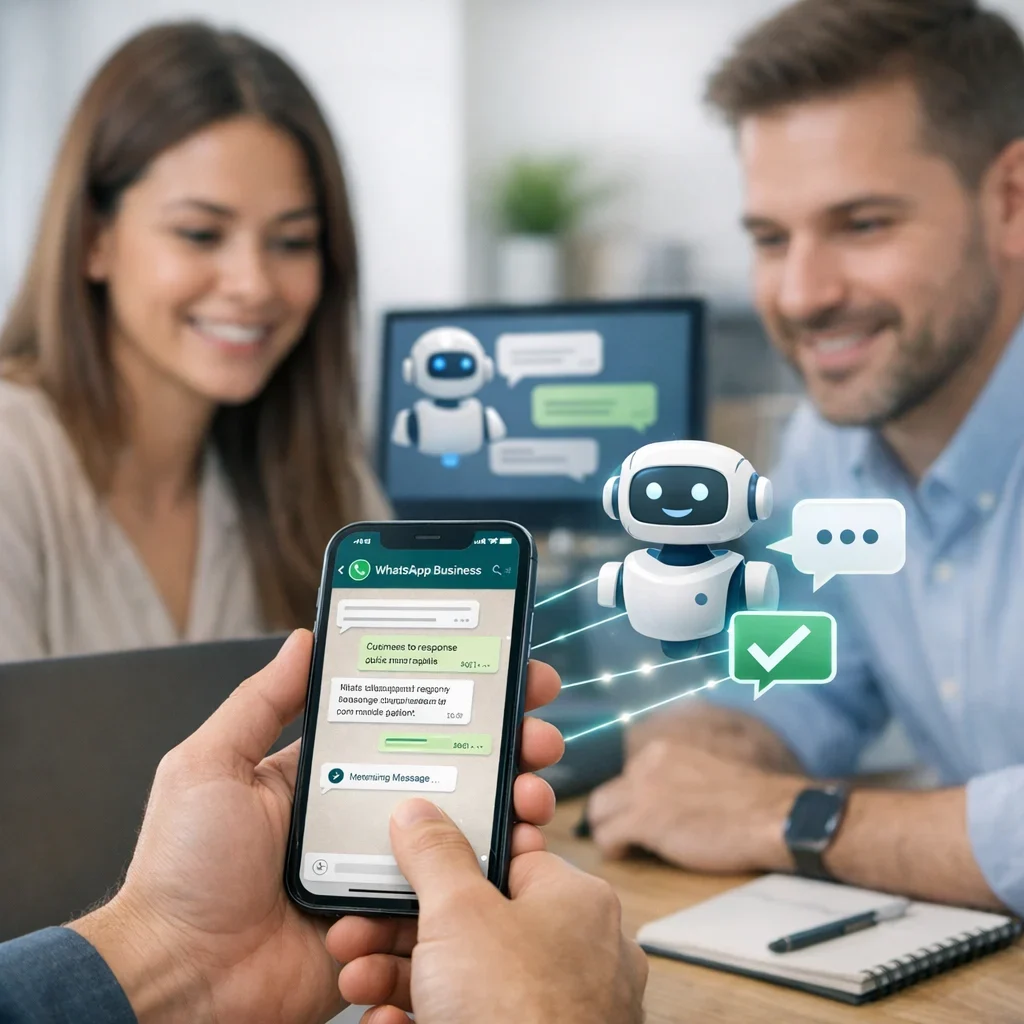
Imagine you're at the gym, sweating it out, when suddenly a customer messages you needing help with an order. With AI in WhatsApp Business, you can respond instantly without losing your focus on those weights. Artificial intelligence has become an essential tool for optimizing communication in business, and WhatsApp Business is no exception. Let's explore how you can make the most of it.
What is WhatsApp Business and How Can AI Be Integrated?
You can support the project by sharing this article or saving it for later.
WhatsApp Business is a version of the popular messaging app specifically designed for small and medium-sized enterprises. It allows businesses to interact with their customers more efficiently, offering tools like automated responses, product catalogs, and chat labels for organization. The integration of AI into this platform elevates communication, making interactions quicker and more personalized.
Benefits of Using AI in WhatsApp Business
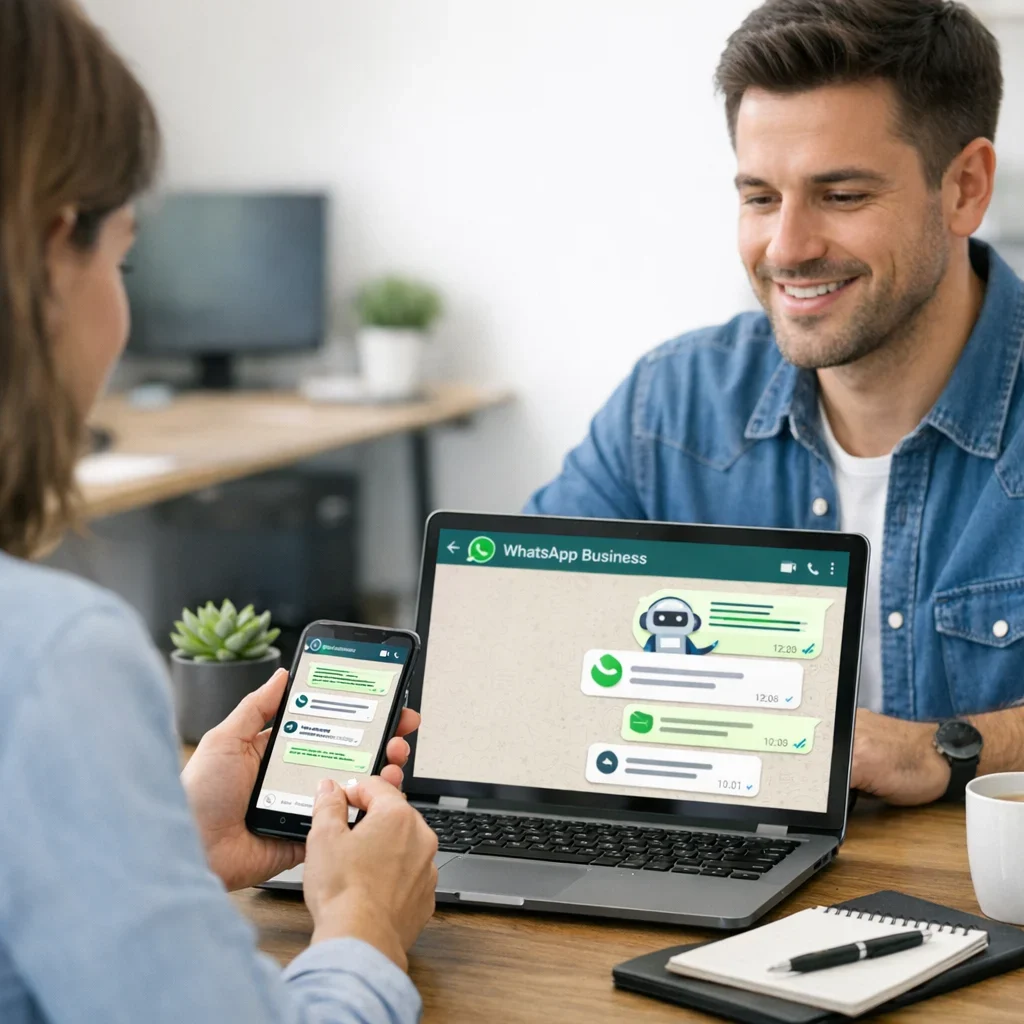
The combination of AI and WhatsApp Business offers several advantages that can transform your communication with customers. Here are a few:
- Automated responses: You can schedule replies to frequently asked questions, saving time and preventing repetitive responses.
- 24/7 assistance: AI can handle inquiries even outside of your working hours. Your customers will feel like you're always there for them!
- Customer segmentation: AI can analyze customer data and provide valuable insights into their preferences.
- Time optimization: Free up your schedule for more important tasks. Spend less time responding to messages and more on growing your business.
Common Mistakes When Implementing AI in WhatsApp Business
Implementing AI may seem straightforward, but there are common mistakes you should avoid. Here are some:
- Not clearly defining the objectives of automation.
- Ignoring user feedback on automated interactions.
- Setting up automated responses that sound too robotic.
- Failing to constantly update customer databases and FAQs.
- Neglecting human attention in situations that require it.
Quick Tips for Optimizing AI in WhatsApp Business
If you want your AI implementation in WhatsApp Business to succeed, follow these tips:
- Clearly define frequently asked questions and update them regularly.
- Use a tone of voice that reflects your brand's personality.
- Set up responses that direct customers to a human agent when necessary.
- Analyze data and adjust automated responses based on customer behavior.
- Continuously test and adjust settings to enhance user experience.
Comparing AI Tools for WhatsApp Business
| Functionality | WhatsApp Business API | Third-party Chatbots | Custom Solutions |
|---|---|---|---|
| Automated responses | Yes | Yes | Yes |
| 24/7 support | Yes | Depends on provider | Yes |
| CRM integration | Limited | Yes | Yes |
| Cost | High | Medium | High |
Integrating AI into Your Marketing Strategy
If you think AI in WhatsApp Business is just for responding to messages, think again. This technology can be a fundamental pillar in your digital marketing strategy. Here's how you can effectively integrate it:
- Audience segmentation: Use AI to analyze customer behavior and segment your audience. This will allow you to send more personalized and relevant messages.
- Automated campaigns: Set up marketing campaigns that trigger based on user behavior. For example, if a customer abandons their cart, AI can send an automatic reminder.
- Predictive analytics: AI can help you predict buying trends and adjust your offerings accordingly. This not only enhances customer experience but also optimizes your inventory.
- Real-time feedback: Implement quick surveys via WhatsApp after a purchase or interaction. AI can analyze feedback and provide valuable insights.
Practical Example: Cart Recovery Campaign
Imagine a customer visits your online store, adds products to their cart, and leaves without purchasing. This is where AI magic comes in:
- The customer abandons the cart.
- AI detects the abandonment and sends a WhatsApp message reminding them of the products left behind.
- If the customer doesn't respond, a second message is sent 24 hours later with a small incentive, like a discount or free shipping.
- If the customer completes the purchase, AI can send a thank-you message and offer further assistance.
This strategy not only boosts your sales but also shows customers that you care about their experience. A win-win!
Challenges and How to Overcome Them
Not everything is smooth sailing when implementing AI in WhatsApp Business. Here are some common challenges and how to tackle them:
- Resistance to change: Some employees may feel threatened by AI. Ensure you communicate that AI is a tool to facilitate their work, not replace them.
- Integration with existing systems: Sometimes, AI doesn't play well with your current systems. Invest time in choosing solutions that are compatible or consider a custom integration.
- Lack of data: AI needs data to learn and improve. Ensure you have a robust data collection system to feed the AI.
- Unrealistic expectations: AI is not magic. Set clear expectations about what it can and cannot do. Communication is key.
Remember, implementing AI is an ongoing process. Don't get discouraged if things don't work perfectly from the start. Adjust, test, and retest. The key is adaptability.
So now you know, if you want your business to stay relevant and competitive, AI in WhatsApp Business is not just an option, it's a necessity. Get to work and enjoy the results!
Success Stories: Who's Doing It Right?
If you think AI in WhatsApp Business is just a distant dream, here are examples of companies already making the most of it. And yes, they do it without needing a master's in robotics. Let's see how some brands have implemented this technology and the results they've achieved.
- E-commerce: An online fashion store used a chatbot to manage inquiries about sizes and availability. Result: a 30% increase in cart recovery. How did they do it? Simple: the chatbot sent automatic reminders to customers who left products in their cart.
- Restaurants: A local restaurant implemented a reservation system via WhatsApp. AI managed reservations and answered frequently asked questions about the menu. Result: a 50% increase in reservations during peak hours. All without overwhelming the staff!
- Financial Services: An insurance company used AI to send payment reminders and personalized advice. Result: a 40% improvement in customer retention. The key was providing relevant information at the right time.
Lessons Learned
These cases show that adapting AI to WhatsApp Business is not only possible but can yield concrete results. Here are some lessons you can apply:
- Identify your weak points: Before implementing AI, analyze which areas of your business need more attention. Is it customer service? Sales? Focus on that.
- Personalize the experience: AI doesn't have to be cold and robotic. Add a human touch to automated responses. Use the customer's name and offer specific solutions.
- Measure and adjust: Don't settle for the first version. Measure the impact of AI on your business and adjust based on results. Optimization is key.
The Future of AI in WhatsApp Business
If you thought this was just a passing trend, think again. AI in WhatsApp Business is here to stay, and its evolution promises to be exciting. Here are some trends already emerging:
- More natural interaction: With advances in natural language processing, chatbots will be able to hold more fluid and human-like conversations. Goodbye to robotic responses!
- Integration with other platforms: AI will increasingly integrate with other marketing and sales tools, creating a more cohesive ecosystem for managing customer relationships.
- Extreme personalization: AI will analyze data in real-time to offer personalized recommendations based on user preferences and behaviors.
Therefore, if you haven't yet embraced AI in WhatsApp Business, it's time to get moving. The competition won't wait, and every day that passes is a missed opportunity. So, what are you waiting for? It's time to kickstart your strategy and see your business transform!
Updated on 11/10/2025. Content verified with experience, authority, and trustworthiness criteria (E-E-A-T).
FAQ about AI in WhatsApp Business
Is it necessary to hire an expert to implement AI in WhatsApp Business?
Not necessarily. There are tools and platforms that facilitate AI integration without deep technical knowledge. However, if you want a more personalized solution, having an expert can be helpful.
What types of businesses benefit most from WhatsApp Business with AI?
Practically any business that interacts with customers can benefit. From online stores to customer service, automation improves response times and customer satisfaction.
Can I try WhatsApp Business without committing long-term?
Yes, you can start with the free version of WhatsApp Business to experiment with its features. If you find it useful, you can then consider more advanced options.
Can AI understand the colloquial language of my customers?
AI is constantly improving, and many chatbot solutions can understand colloquial language and slang. However, it's advisable to adjust responses for greater effectiveness.
How can I measure the success of my AI implementation in WhatsApp Business?
You can do this through metrics like response rate, average response time, and customer satisfaction. Analyzing this data will allow you to make adjustments and improve your system.
As we've seen in other Berraquero.com guides on automation and CRM, the key is finding the balance between efficiency and personalized attention. AI can be your best ally if used intelligently. Don't hesitate to give it a try!