
Enhancing Sales Training with AI: Roleplays and Objections

Imagine being in a sales meeting, surrounded by colleagues, when suddenly a client presents an unexpected objection. The tension is palpable, and this is where AI sales roleplay can make a difference. Whether in the office, at home, or even during a gym break, AI-driven sales training simulations can be your best ally in tackling challenging situations. In this article, we break down how to leverage this tool to enhance your sales team's effectiveness.
Why Incorporate AI in Sales Training?
You can support the project by sharing this article or saving it for later.
Artificial intelligence has revolutionized how businesses operate, and sales training is no exception. Here are some of the most notable advantages:
- Realistic simulations: AI can create sales scenarios that mimic real situations, allowing salespeople to practice and receive instant feedback.
- Personalization: Every salesperson is unique, and AI can tailor roleplay exercises to meet each individual's specific needs, maximizing learning.
- Performance analysis: AI tools can analyze salespeople's performance and provide insights into areas for improvement.
How AI Roleplay Works
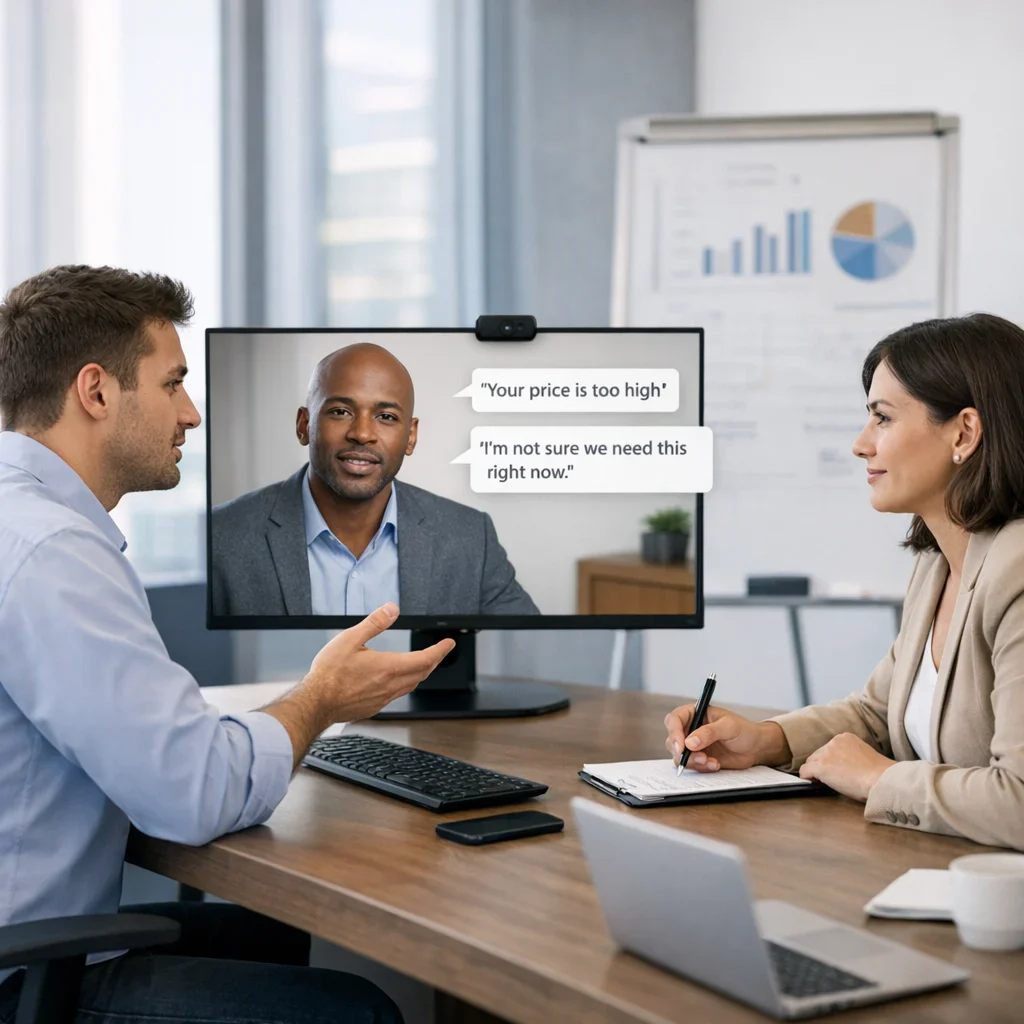
The AI roleplay process is usually straightforward and effective. Here’s how it typically unfolds:
- Scenario definition: A specific context is established, such as a sales call or face-to-face meeting.
- Interaction: The salesperson interacts with an AI agent simulating the client, posing questions and objections.
- Feedback: After the session, the system provides a detailed analysis of what went well and what can be improved.
Common Mistakes in AI Sales Training
As with any process, it's easy to fall into certain pitfalls. Here are some of the most common:
- Failing to clearly define the objectives of the roleplay.
- Not adapting scenarios to market realities.
- Underestimating the importance of feedback.
- Neglecting to track the results obtained.
Quick Tips for Maximizing Effectiveness
If you want AI roleplay to be effective, here are some practical tips:
- Before each session, set clear objectives for what you want to achieve.
- Ensure that scenarios are realistic and relevant to your industry.
- Encourage continuous feedback among team members.
- Conduct roleplay sessions on a regular basis to reinforce learning.
| Element | What to Check | Red Flag | Action |
|---|---|---|---|
| Session Objectives | Clear goal definition | No specific objectives | Review and define concrete objectives |
| Roleplay Scenarios | Relevance and realism | Poorly representative scenarios | Update or create new scenarios |
| Team Feedback | Constructive comments | Lack of feedback | Encourage post-session discussions |
| Results Analysis | Progress tracking | Data without follow-up | Implement performance analysis |
The Art of Improvisation in Sales
One thing that AI sales training cannot teach you is the skill of improvisation. The reality is that no matter how much you practice, there will always be a client who throws an unexpected question or objection your way. So, how do you prepare for those moments? Here are some tricks:
- Active listening: It’s not just about hearing what the client says, but understanding their needs and concerns. Ask questions that show you are genuinely interested.
- Reframe objections: When a client raises an objection, try to rephrase it positively. For example, if they say "I don't have the budget," you might respond, "I understand that budget is a key factor; how about we explore options that fit within that?"
- Use stories: Sometimes, a good story can be more persuasive than any logical argument. Share examples of satisfied customers who had similar doubts and how they found value in your product.
Integrating AI into Sales Culture
AI should not just be another tool in your toolbox, but an integral part of your company's sales culture. Here are some strategies to achieve this:
- Continuous training: It’s not just about having one roleplay session and forgetting about it. Organize regular sessions using AI to keep everyone updated on best practices.
- Encourage collaboration: Motivate team members to share their experiences and learnings after roleplay sessions. This not only boosts morale but also creates a collective learning environment.
- Recognize and celebrate achievements: When someone improves thanks to AI training, celebrate the success! This not only motivates that individual but also inspires others to engage more actively in the process.
Practical Example: A Roleplay in Action
Imagine you are in a roleplay session. The scenario: a potential client who is torn between your product and a competitor's. Here’s an example of how the conversation might unfold:
- Salesperson: "I understand you are considering several options. What do you value most in these types of products?"
- Client: "Durability is key for me, and I've heard that the competitor has a good reputation in that regard."
- Salesperson: "That’s completely understandable. Let me share a case of a client who, like you, was looking for durability and found our product exceeded their expectations. Would you like to hear more about their experience?"
This type of interaction not only demonstrates how to handle objections but also highlights the importance of adapting your approach to each client. Ultimately, the key is to be authentic and willing to learn from every experience, whether in a roleplay or a real conversation.
Conclusion: Practice Makes Perfect
AI roleplay is a powerful tool, but remember that true mastery in sales comes from constant practice and a willingness to learn from every situation. AI can provide you with the perfect scenario, but you are the one who must act and adapt. So, the next time you face an unexpected objection, take a deep breath and remember: you are here to learn and improve!
Demystifying AI Roleplay
If you thought that AI roleplay is just a passing trend or a whim of sales gurus, I invite you to reconsider your biases. The reality is that this tool has become an essential resource for training sales teams. But how does this translate into daily practice? Let’s break down some myths and realities surrounding this technique.
Myth 1: It's Only for Beginners
Many believe that AI roleplay is exclusive to those taking their first steps in sales. Wrong! The best salespeople also benefit from this practice. The reason is simple: even the most experienced can find areas for improvement. AI offers a safe space to experiment and refine skills without the fear of judgment.
Myth 2: It's Not as Effective as Traditional Training
Traditional training has its place, but AI roleplay provides an interactive experience that simply cannot be replicated in a classroom. Here, it’s not just about listening; it’s about acting. The instant feedback provided by AI is invaluable and allows for real-time adjustments, something a human instructor cannot always offer.
Myth 3: It's Just Another Tool
If you think AI roleplay is just another tool in your arsenal, you are underestimating its potential. It is a methodology that can transform your company's sales culture. Constant practice and the use of smart technology can elevate your team’s performance to levels you never imagined.
Implementing AI Roleplay in Your Team
Now that we’ve dispelled the myths, it’s time to discuss how to implement this technique in your sales team. Here are some practical steps to get you started:
- Identify needs: Before diving in, analyze which areas need more attention in your team. Are they objections? Product presentation? This will help you create relevant scenarios.
- Select the right tool: Not all AI tools are the same. Research and choose the one that best fits your needs. Look for options that offer customization and detailed analysis.
- Set a schedule: Consistency is key. Schedule roleplay sessions regularly and ensure all team members participate. This not only improves skills but also fosters group cohesion.
- Encourage a feedback culture: After each session, take time to discuss what worked and what can be improved. Constructive feedback is crucial for growth.
- Celebrate achievements: Recognizing progress, no matter how small, can be a great motivator. Celebrate every improvement and success, and you’ll see team morale rise.
Example of an Effective Roleplay Scenario
Let’s look at a practical example of how a roleplay might unfold in a sales environment. Imagine the scenario is a follow-up call to a client who has shown interest but hasn’t made a decision yet:
- Salesperson: "Hi, [Client's Name], this is [Your Name] from [Your Company]. I wanted to follow up on our last conversation. Did you have a chance to think about our proposal?"
- Client: "Yes, but I still have some doubts about the implementation."
- Salesperson: "I understand that implementation can be a deciding factor. Would you like me to explain how we’ve helped other clients in similar situations?"
This type of interaction not only shows how to handle objections but also emphasizes the importance of adapting your approach to each client. Ultimately, the key is to be authentic and willing to learn from every experience, whether in a roleplay or a real conversation.
Conclusion: The Future of Sales
AI roleplay is not just a trend; it’s a tool that is here to stay. In a world where competition is fierce and customer expectations are higher than ever, having a well-prepared sales team is essential. So, don’t get left behind. Embrace this practice, demystify its benefits, and watch your team not only improve but also feel more confident and capable of facing any objection that comes their way. The sales of the future start today!
Updated on 11/10/2025. Content verified with experience, authority, and trustworthiness (E-E-A-T) criteria.
FAQ about AI Sales Roleplay
What is a sales roleplay?
A sales roleplay is a training technique where salespeople simulate interactions with clients, facing real situations and practicing their skills in a controlled environment.
How can AI help in roleplays?
AI can create personalized scenarios, provide instant feedback, and analyze the salesperson's performance, allowing for more effective and tailored learning.
Is prior experience necessary for AI roleplays?
It’s not essential. In fact, roleplays are an excellent way to learn and improve, even for those new to sales. AI adjusts to the user's skill level.
How often should sales roleplays be practiced?
It is recommended to practice sales roleplays regularly, at least once a week, to maintain and improve sales skills over time.
What are the most recommended AI tools for sales roleplay?
There are various tools available in the market, but it’s advisable to research and choose those that best fit your team’s specific needs and offer good customization and analysis capabilities. For more information, you can check this article on educational tools.