
Essential Guide to Kettlebells for Beginners
Essential Guide to Kettlebells for Beginners
Table of Contents
Common Mistakes
You can support the project by sharing this article or saving it for later.

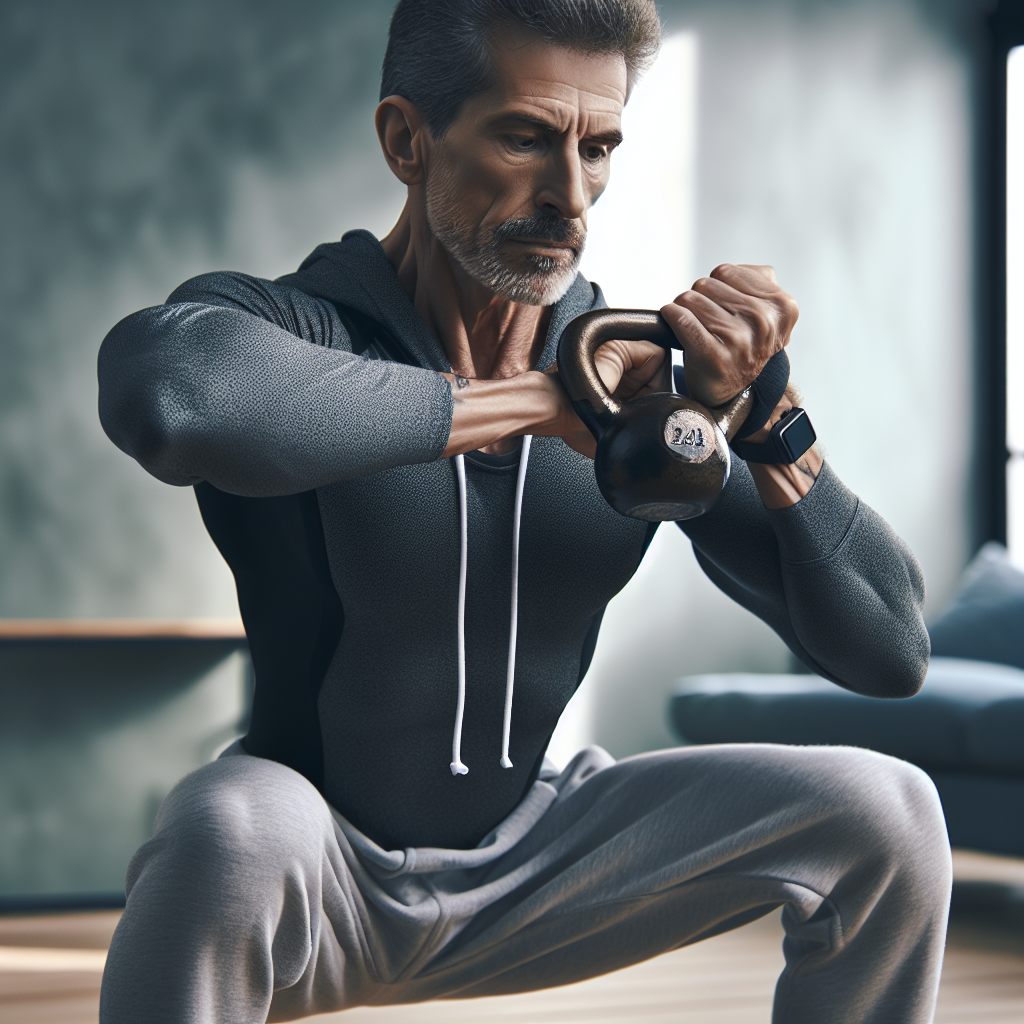
When starting to train with kettlebells, it's easy to make mistakes that can hinder your progress and, worse, lead to injuries. Here’s a list of the most common mistakes to avoid:
- Incorrect posture: Failing to maintain proper alignment can lead to injuries. Ensure your back is straight and your knees are aligned with your feet.
- Using an inappropriate weight: Starting with a kettlebell that is too heavy limits your ability to learn the correct technique. Choose a weight you can handle easily.
- Lack of warm-up: Not warming up before starting your routine can increase the risk of injury. Spending a few minutes on stretching is essential.
- Neglecting technique: How you perform an exercise is more important than the amount of weight or repetitions. Focus on mastering each movement.
- Overtraining: Many beginners get excited and train more than recommended. Listening to your body and allowing it to recover is vital.
- Ignoring breathing: Many forget to breathe properly during exercise. Learn to inhale during relaxation phases and exhale during exertion.
- Skipping progressions: Wanting to advance too quickly can lead to poor technique. Take your time to master each movement.
- Ignoring rest: Not allowing your body time to recover can lead to fatigue and injuries. It's crucial to include rest days in your routine.
Quick Tips

To enhance your experience as a beginner with kettlebells, here are some helpful tips:
- Start light: Begin with kettlebells weighing 4 to 8 kg, depending on your fitness level.
- Practice with a mirror: Use a mirror to check your posture and technique while training.
- Know your limits: Listen to your body and don’t push beyond your limits in the early sessions.
- Have a varied routine: Include different exercises each week to work all muscle groups and keep things interesting.
- Inform someone: Training with a partner or informing someone about your routine can keep you motivated and accountable.
- Use a timer: Set work and rest intervals to optimize your training and maintain intensity.
- Record your workouts: Filming your sessions can help you spot errors and track progress more clearly.
- Take breaks: Between sets, take a moment to catch your breath and adjust your technique.
- Listen to a podcast or music: Staying entertained can make your workouts more enjoyable.
Mini Case Study
Let’s imagine Marina, a 30-year-old beginner living in Madrid, decides to start her kettlebell journey. She begins with a 6 kg weight and a beginner training video.
In her first week, Marina focuses on basic movements: the swings, goblet squat, and overhead press. Each day, she dedicates 30 minutes to learning calmly, paying attention to technique and her online instructor's advice. She warms up beforehand and finishes with stretching.
After the first week, she feels more confident and starts increasing the weight to 8 kg. She manages to perform 10 repetitions of each exercise without losing proper form! Additionally, she has noticed improvements in her endurance and strength. This progress gave her the confidence to invite a friend to train with her.
Marina shows us that with patience and discipline, any beginner can take advantage of what kettlebells have to offer. Moreover, she realizes that following a structured plan and documenting her progress keeps her motivated. For her second week, she incorporates exercise variations, which sparks even more interest in training.
One day, she decides to try a mini circuit that includes 30 seconds of swings, 30 seconds of goblet squats, and 30 seconds of rest. This variation motivates her even more! Learning to be flexible in her routines proves key to maintaining her enthusiasm in the long run.
Frequently Asked Questions (FAQ)
- What kettlebell should I buy as a beginner?
Start with a kettlebell weighing between 4 and 8 kg, depending on your fitness level. Women typically start with 4-6 kg, while men may opt for 8 kg. - How many times a week should I train?
For beginners, it is recommended to train 2 to 3 times a week, allowing rest days between sessions for muscle recovery. - Can I do cardio with kettlebells?
Yes, kettlebells provide an excellent cardiovascular workout when performing high-intensity exercises like swings or snatches. - Is a personal trainer necessary?
It is not strictly necessary, but a couple of sessions with a trainer can be very helpful for learning the correct technique. - How long will it take to see results?
Results can vary, but if you maintain a consistent and healthy routine, you can see significant improvements in a few weeks. - What should I do if I feel pain during training?
If you feel pain (not just discomfort), stop immediately. Assess the cause and consider consulting a professional if it persists. - What exercises are ideal for beginners?
Start with movements like the swing, goblet squat, and deadlift. These exercises work multiple muscle groups and help improve your technique. - Can I combine kettlebells with other exercises?
Absolutely, you can incorporate kettlebells into functional training sessions, HIIT, or Pilates for a more comprehensive routine. - Is it normal to feel soreness after training?
Yes, it is common to feel soreness at first. However, if the pain is excessive, review your technique or reduce the weight. - What should I do if I get bored during workouts?
Try varying the exercises or doing circuit training to maintain motivation. Listening to music can also be helpful.
Training with kettlebells is an effective and fun way to improve your fitness, as long as you avoid common mistakes and follow some basic tips. Don’t hesitate to start and enjoy the process!
External Authority Resource
Originally published on 2025-09-09. Content verified with experience, authority, and trustworthiness criteria (E-E-A-T).