
Maximize Savings with AI: Identify Costly Suppliers and Spending Leaks
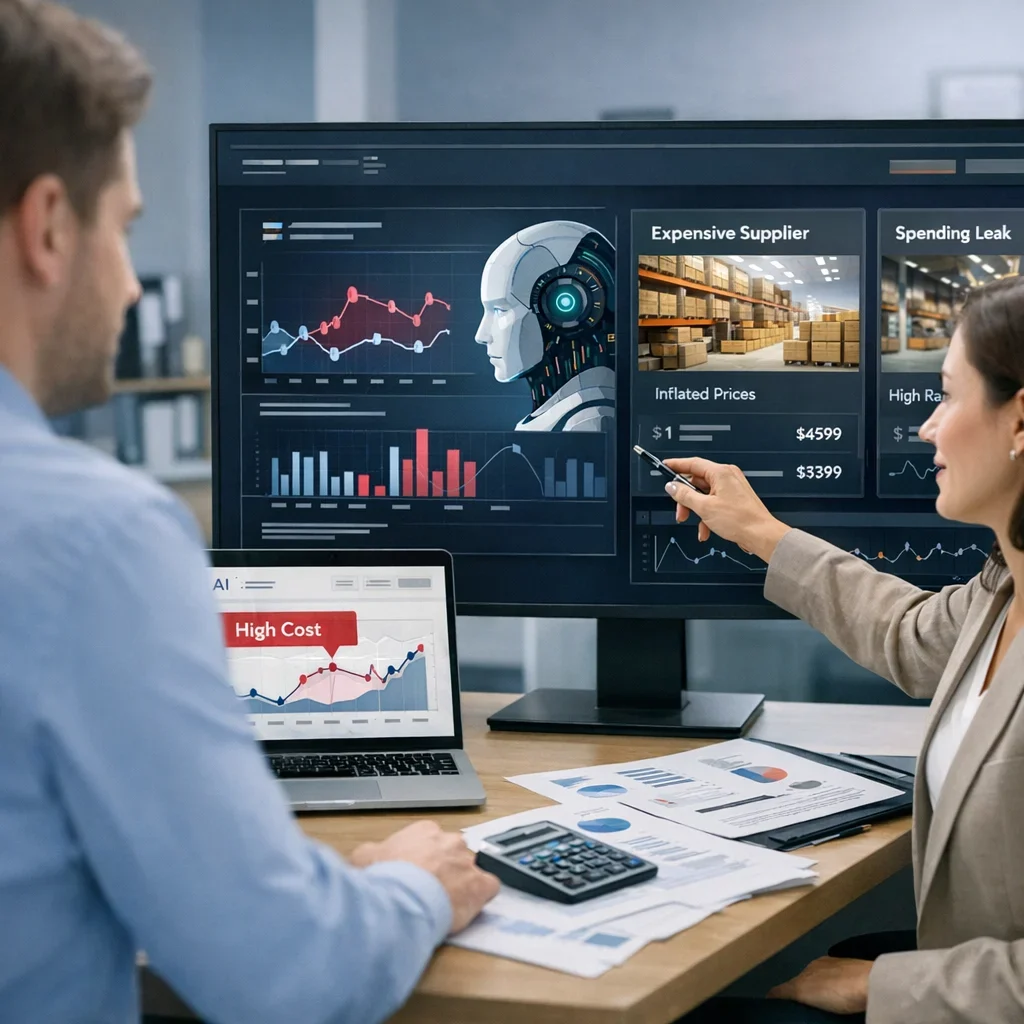
In today's world, where every penny counts, AI for purchasing has become an essential tool for companies looking to maximize efficiency and reduce costs. Imagine sitting in the office, reviewing supplier invoices, and realizing you're paying more for the same products than you did a couple of months ago. This is where artificial intelligence comes into play, helping you detect costly suppliers and spending leaks before they turn into a black hole in your budget.
How Can AI Assist in the Purchasing Process?
You can support the project by sharing this article or saving it for later.
Artificial intelligence can transform your company's purchasing process in several ways. From supplier selection to inventory management, here are some key functionalities:
- Data Analysis: AI can analyze large volumes of data to identify spending patterns and purchasing behaviors.
- Needs Prediction: Using machine learning algorithms, AI can predict when you'll need to restock, avoiding last-minute purchases.
- Supplier Optimization: It helps you find the most suitable supplier based on price, quality, and delivery times.
- Anomaly Detection: AI can automatically flag unusual or excessive spending that may indicate a problem.
Common Mistakes in Purchasing Management

When implementing AI in purchasing, it's easy to fall into some common mistakes. Here’s a list to help you avoid pitfalls:
- Not Clearly Defining Objectives: Without a clear goal, it's hard to measure the success of the implementation.
- Ignoring Data Quality: AI is only as good as the data it uses. Ensure your data is clean and well-organized.
- Underestimating Staff Training: Technology is just one part; the team needs to understand how to use it effectively.
- Lack of Integration with Other Systems: Ensure AI communicates well with your ERP and CRM to maximize its utility.
Quick Tips for Implementing AI in Purchasing
If you're convinced that AI is the way to go, here are some practical tips to get started:
- Set clear and measurable objectives.
- Invest in training for your team on AI tools.
- Analyze your current suppliers before implementing AI.
- Test different AI models to see which best fits your needs.
- Continuously monitor and adjust based on results.
| Criterion | Assessment | Priority |
|---|---|---|
| Data Analysis | High | High |
| Needs Prediction | Medium | Medium |
| Supplier Optimization | High | High |
| Anomaly Detection | High | High |
| System Integration | Medium | Low |
AI and Smart Purchasing: Beyond the Numbers
If you thought AI was just a luxury for large corporations, think again. Artificial intelligence can be your best ally in making smarter purchases. But what does that really mean? Let's break it down without beating around the bush.
1. Purchases Based on Real Data
AI not only helps you detect costly suppliers; it can also transform how you buy. Imagine every time you go to purchase, your virtual assistant has already analyzed price history, product quality, and even reviews from other buyers. Wouldn't that be wonderful? Here are some practical steps to achieve this:
- Gather Data: Start by accumulating data from previous purchases, including prices, quantities, and delivery times.
- Analyze Trends: Use AI tools to identify patterns. Is there a supplier that always raises prices after holidays? Note it down!
- Automate Decisions: Set up alerts for AI to notify you when a supplier lowers their prices or when an item is about to run out.
2. The Importance of Personalization
Who hasn't received a marketing email that has nothing to do with what they actually need? AI can help you avoid such errors. By analyzing your purchasing habits, it can offer you more personalized options. Here are some examples:
- Purchase Suggestions: If you regularly buy specific products, AI can suggest cheaper or higher-quality alternatives.
- Smart Reminders: If you tend to buy certain products at specific times, AI can remind you to do so before they run out.
- Automatic Comparison: AI can compare prices and product features in real-time, helping you make more informed decisions.
Practical Cases: AI in Action
To show you that this is not just theory, here are some practical cases of how AI has changed the game in purchasing:
| Company | AI Implementation | Results |
|---|---|---|
| Company A | Using AI for expense analysis and supplier optimization | 15% reduction in annual costs |
| Company B | Automating the restocking process | 40% less time spent on inventory management |
| Company C | Demand forecasting with AI | 25% improvement in order accuracy |
As you can see, implementing AI is not a luxury; it's a necessity. If you want your company to stay ahead, it's time to hop on the artificial intelligence train. And no, you don't have to be a tech expert. With a little willpower and the right tools, you can make AI work for you, not the other way around.
AI and Supplier Management: A Necessary Romance
When it comes to purchasing, having quality suppliers is just as important as knowing when to fire those who don't deliver what they promise. AI can be your cupid in this process. But how can you make the most of it? Here are some strategies to make your relationship with suppliers a bit more... fruitful.
1. Continuous Supplier Evaluation
Don't settle for first impressions. AI allows you to continuously evaluate your suppliers. Here are a couple of ways to do it:
- Automated Scorecards: Create a scoring system that evaluates suppliers based on criteria like quality, price, and delivery times. AI can automatically update these scores based on the data you collect.
- Performance Alerts: Set up alerts to notify you when a supplier fails to meet established standards. This will allow you to act quickly before the problem escalates.
2. Proactive Search for New Suppliers
Why wait for a supplier to disappoint you? With AI, you can be proactive. Here are some steps to explore new options:
- Market Monitoring: Use AI tools to scan the market and detect new suppliers offering better prices or quality. This will give you a competitive edge.
- Offer Comparison: AI can help you compare multiple supplier offers in real-time, allowing you to choose the best option without wasting time.
AI as an Ally in Negotiation
Negotiating with suppliers can be like trying to convince a cat to take a bath: complicated. AI can make your job easier. How? Let's see.
1. Historical Price Analysis
Before entering a negotiation, it's vital to know what you've paid in the past. AI can analyze price history and provide you with a clear view of what is reasonable to ask for. Here’s how to do it:
- Gather Historical Data: Ensure you have a record of previous prices. AI can help you organize this information for easy reference.
- Generate Reports: Create reports showing price trends over time. This will give you a solid foundation for your arguments during negotiations.
2. Negotiation Scenario Simulation
AI can run simulations to show you how a supplier might react to different proposals. This can be a game-changer. Consider the following:
- Hypothetical Scenarios: Input different variables into the AI to see how they might affect the negotiation. What happens if you offer a long-term contract? Or if you ask for a volume discount?
- Expected Outcomes: AI can predict the likelihood of success for each scenario, helping you choose the best strategy.
Success Stories: Companies That Got It Right
To show you that this is not just talk, here are some examples of companies that have successfully leveraged AI in their purchasing and supplier management processes:
| Company | Use of AI | Results |
|---|---|---|
| Company D | Supply chain optimization through AI | 20% reduction in delivery times |
| Company E | Implementation of chatbots for supplier support | 30% fewer manual inquiries |
| Company F | Using AI for risk analysis in suppliers | Early identification of supply issues |
Artificial intelligence is not just a luxury; it is an essential tool for modern purchasing management. If you want to keep your suppliers in line and your expenses under control, it's time for AI to become your best friend. Remember, at the end of the day, it's about making your job easier and your results more impactful. So, what are you waiting for to give AI a chance in your purchasing processes?
Updated on 11/10/2025. Content verified with experience, authority, and trustworthiness (E-E-A-T) criteria.
FAQ about AI for Purchasing
What type of data do I need to implement AI in purchasing?
You will need historical purchasing data, information about suppliers, prices, delivery times, and any other relevant data that helps you make informed decisions. The more complete and accurate the data, the better AI will perform.
Is implementing AI expensive?
Implementation costs can vary, but there are options on the market for different budgets. The important thing is to consider the return on investment you'll get from optimizing your purchasing processes.
Can I use AI if my company is small?
Absolutely. There are accessible AI solutions for companies of all sizes. The key is to choose the tool that best fits your needs and resources.
How can I measure the success of AI in my purchasing?
Establish clear KPIs from the beginning, such as cost savings, reduced purchasing times, or improved supplier quality. Regularly monitor to adjust your strategies based on results.
Where can I find more information about AI in purchasing?
You can consult studies and guides on AI in purchasing, such as those published by institutions like the OEI, which offer valuable and updated resources on the topic.