
The NPUs Leading the Way in 2026: What Really Changes and What’s Just Marketing

If you're looking for the best NPUs of 2026, you've probably come across countless promises about power, efficiency, and a revolution in artificial intelligence. But what’s really behind those numbers and acronyms? This year, Neural Processing Units (NPUs) have made an interesting leap, although not everything that glitters is gold. Let’s break down which changes are genuine and which are just smoke and mirrors for marketing.
What Makes an NPU Different Today?
NPUs have become a key component for accelerating artificial intelligence tasks, especially in mobile devices and embedded systems. In 2026, the difference lies not just in raw speed, but in how these units manage energy efficiency and integration with other systems.
For companies and developers, it’s not enough to just look for the fastest NPU. The real evolution lies in the ability to handle heterogeneous workloads, provide flexibility for different AI models, and, above all, optimize consumption so that the hardware can last long hours without overheating or skyrocketing energy costs.
If you're considering upgrading or choosing an NPU for your project, keep these variables in mind. The rest is usually marketing.
Want to know which options offer the best balance between performance and efficiency? Keep reading, as it’s not all about raw power.
Quick Comparison: Which NPU Matters Based on Use
| Real Use | What to Look for in the NPU | Useful Signal | Marketing Signal |
|---|---|---|---|
| Portable for light AI work | Sustained TOPS, consumption, and system support | Smooth local functions without draining the battery | Huge numbers without real-world usage tests |
| Assisted image and video editing | Compatibility with specific apps | Faster filters, cropping, and transcription | Promising “professional AI” without specifying the application |
| Copilot, summaries, and office tasks | Integration with Windows, drivers, and memory | Quick local response and lower consumption | Confusing NPU with a powerful GPU |
| Gaming or heavy rendering | GPU and CPU still weigh more | The NPU assists in auxiliary functions | Selling the NPU as a substitute for a graphics card |
The Best NPUs of 2026: Between Reality and Exaggeration
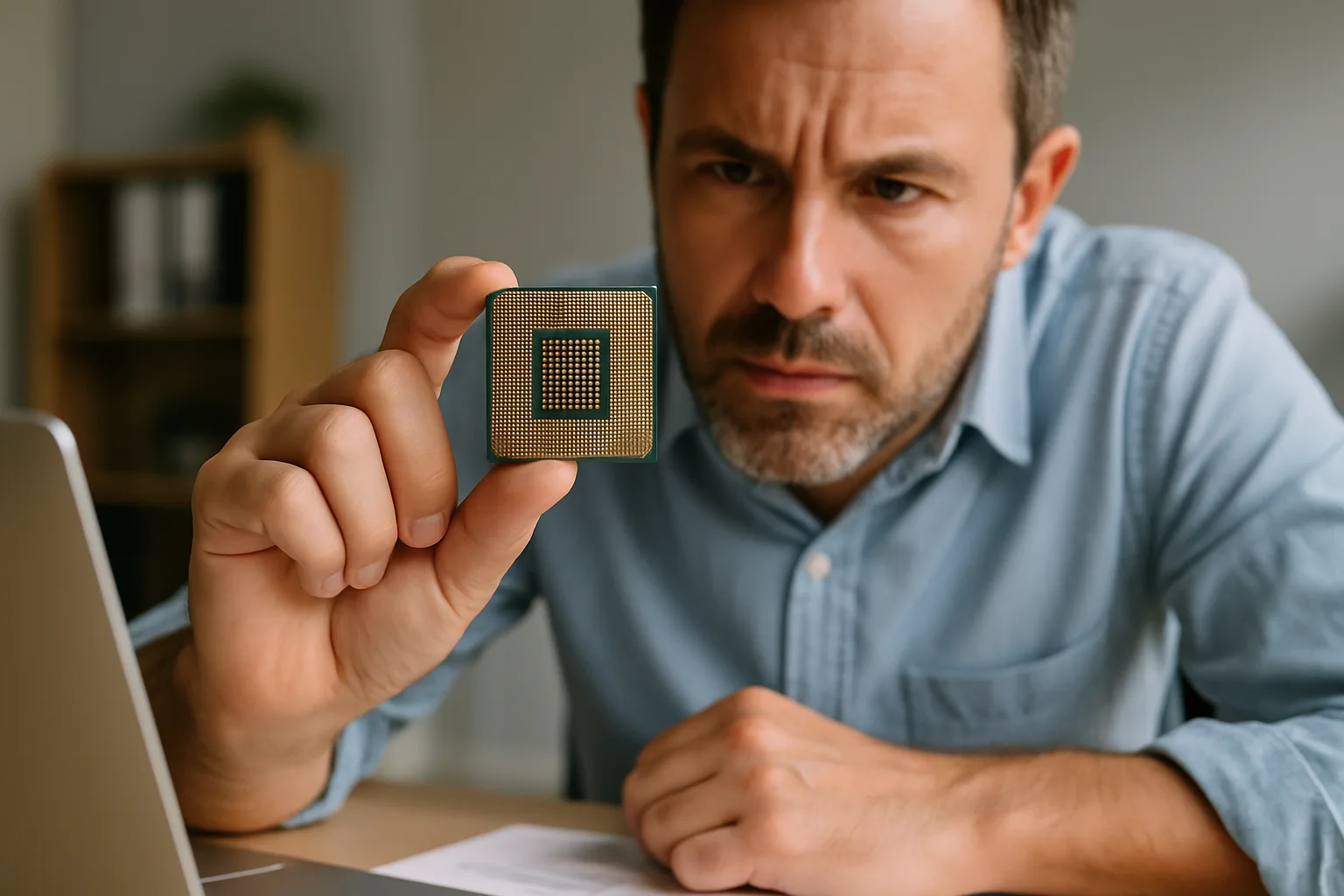
This year, the market is saturated with options that promise to multiply performance tenfold compared to previous generations. However, such figures should be taken with a grain of salt. In many cases, the announced improvements are based on very specific benchmarks or ideal conditions that don’t reflect everyday use.
For example, some NPUs excel in voice or image recognition tasks but struggle with complex inferences or multitasking. Others, while powerful, consume so much energy that their use is limited to high-end devices or data centers.
The best models of 2026 tend to be those that balance performance and consumption, as well as offer support for current AI frameworks without the need for complicated patches or adaptations. It’s no coincidence that interoperability and ease of integrating the NPU into existing systems are decisive factors for its adoption.
And what about the number of cores or frequency? More isn’t always better. In practice, architecture and software optimization weigh more than just a simple increase in numbers on the spec sheet.
Is It Worth Investing in the Most Expensive NPUs for Your Business?
This is the million-dollar question. In business environments, hardware investment must justify a clear return. The top NPUs on the market often come with a high price tag and frequently require changes in infrastructure or software development to make the most of them.
If your business relies on applications that require real-time intensive AI processing, such as autonomous vehicles, video analysis, or smart assistants, then yes, investing in a powerful and efficient NPU can make a difference. But be careful, not all companies need that level of power.
For many, a mid-range NPU, well-integrated and with solid support, may be sufficient and more cost-effective. The key is to evaluate the specific use case, scalability, and ease of maintenance.
Don’t fall into the trap of buying just for the sake of it. Here, criteria and planning are essential.
What to Expect from NPUs in the Coming Years?
If there’s one thing I’ve learned from following the evolution of NPUs, it’s that the future doesn’t simply involve cranking up the power. The trend points towards specialization, energy efficiency, and intelligent integration with other system components.
We will see NPUs that dynamically adapt to workloads, learn to optimize their consumption, and collaborate with CPUs and GPUs in a more refined orchestration. It’s also likely that transparency in performance and support for open frameworks will become essential requirements for an NPU to stand out.
And marketing? It will continue to be a tough nut to crack. Hardware companies know that numbers impress, but we, as users or technology managers, must look beyond. We should ask ourselves: does this really improve my product or service? Is the added cost worth it? How much will implementation complicate things?
Ultimately, choosing the best NPU in 2026 is a balance between real need, usage context, and integration capability. There are no one-size-fits-all solutions or magic recipes, only well-informed decisions.
The Real Impact of Heterogeneity in NPUs and Why It Matters More Than You Think
When we talk about NPUs, it’s common to focus on metrics like clock frequency, the number of cores, or energy consumption. However, a nuance that rarely gets addressed in depth is the internal heterogeneity of these units and how this feature can make a difference in real-world usage scenarios. Not all NPUs are simply “more cores or more GHz.” Some incorporate specialized cores for different types of operations — for example, cores optimized for convolutions, others for sparse matrix operations, or even dedicated units for variable precision calculations.
This heterogeneity allows the NPU to adapt its internal architecture based on the specific task, executing each operation with the unit that handles it best, thus achieving greater energy efficiency and speed. A clear example is the processing of large language models (LLMs), where certain matrix multiplication operations can benefit from cores with reduced precision, while other parts of the model require full precision. A homogeneous NPU, while powerful, might be forced to perform all operations with the same unit, losing optimization and consuming more energy.
Moreover, this internal adaptability not only improves performance but also reduces heating and hardware degradation over time, a crucial aspect for mobile devices or embedded systems where thermal dissipation is limited. Therefore, when comparing the best NPUs of 2026, don’t just settle for the “total cores” figure: investigate whether the architecture is heterogeneous and how that translates into efficiency for your specific case.
When Interoperability Becomes the True Technological Battleground
Another aspect that often goes unnoticed in the race for the “best NPUs” is interoperability with the software and hardware ecosystem. In practice, an NPU may have impressive theoretical performance, but if it doesn’t natively support the most used AI frameworks — like TensorFlow, PyTorch, or ONNX — or requires complex and costly adaptations, its real value plummets.
A specific case occurred in 2025 with an NPU model that promised to double inference speed compared to its competitors but only offered limited support for PyTorch. This forced many developers to invest time and resources in adapting their models or even switching frameworks, which slowed adoption and generated frustration. In contrast, NPUs with native support and optimizations for multiple frameworks quickly gained ground, even if their raw performance was slightly lower.
Ultimately, the ease with which an NPU integrates into the existing workflow and the developer community is not a minor detail: it’s a decisive factor for a technology to transition from being promising to becoming a de facto standard. Therefore, in 2026, the best NPUs will not only stand out for their power but also for their ecosystem and support.
Beyond Power: The Paradox of Overclocking and Durability
A phenomenon that is often overlooked when comparing NPUs is how overclocking or intensive use to squeeze every drop of power can affect the device's durability. In the world of NPUs, forcing the unit to operate constantly at maximum frequency or under extreme loads can accelerate component wear, increase the likelihood of failures, and reduce the overall lifespan of the hardware.
This is not an exclusive problem for mobile devices: even in data centers, where cooling is more efficient, continuous stress can translate into additional maintenance and replacement costs. Thus, an NPU that promises spectacular performance in benchmarks may not be the best choice for critical applications that require stability and longevity.
For example, some companies that implemented NPUs with aggressive configurations for real-time video analysis in security found that the hardware required more frequent replacements than expected, raising operational costs. In contrast, others that opted for NPUs with more conservative consumption profiles and intelligent thermal management achieved a more cost-effective balance in the long run.
This aspect invites a reevaluation of the obsession with maximum power and emphasizes thermal management and robustness as key criteria in choosing the best NPUs for 2026.
Common Mistakes When Comparing NPUs
The first mistake is looking only at TOPS as if they were horsepower in a car. They serve as a guideline, but they don’t tell you on their own if the equipment will perform better in your day-to-day.
The second mistake is forgetting about software. A powerful NPU without real support in the applications you use can remain a pretty promise.
The third mistake is thinking that the NPU replaces the GPU. For gaming, heavy rendering, or demanding graphic tasks, the graphics card remains the key component.
FAQ about the Best NPUs of 2026
What does NPU mean?
An NPU is a processor specialized in artificial intelligence tasks. Its value lies in executing certain AI functions with less consumption than a CPU or GPU.
How many TOPS do I really need?
It depends on the use. For office functions, summaries, camera effects, or light AI, both efficiency and system support matter as much as the raw TOPS figure.
Does an NPU improve gaming?
Not directly like a good GPU. It can help with specific functions, but it shouldn’t be the main criterion if you’re buying a machine for gaming.
Is it worth changing laptops just for the NPU?
Only if you’re going to use tools that already take advantage of that local acceleration. If your current machine works well and you mainly rely on cloud AI, it’s worth considering carefully.
Published: 11/05/2026. Content reviewed using experience, authority and trustworthiness criteria (E-E-A-T).
This article may have used artificial intelligence tools to support structure, editing, translation or review. Editorial responsibility and final review remain with Toni Berraquero. View AI policy

You can support the project or share this article in one click. At least this block does something useful.