
Transforming Employee Onboarding with AI for a Seamless Experience
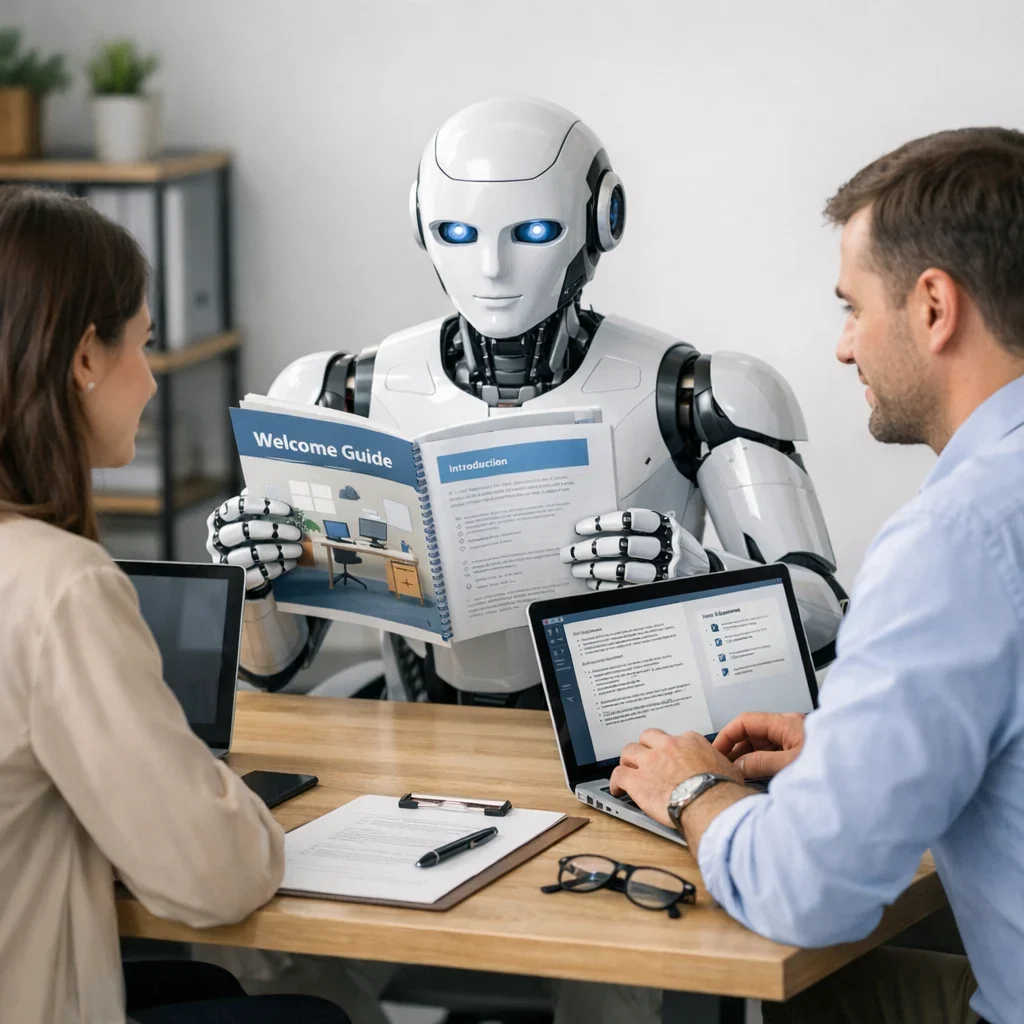
Imagine starting a new job and receiving a welcome manual that is clear and useful instead of one that feels robotic and emotionless. This is where AI onboarding comes in, making the integration process for new employees smoother and less painful. In this article, we will explore how to leverage artificial intelligence to create a welcome manual that truly works and avoids being a boring brick of text.
What is Onboarding and Why Does it Matter?
You can support the project by sharing this article or saving it for later.
Onboarding is the process of integrating a new employee into the company. It’s the time when they are introduced to the culture, policies, and tools they will need to perform their job. A good onboarding experience can make the difference between a motivated employee and one who feels lost. So, why not make it more interesting and effective by using AI?
How AI Can Enhance Onboarding
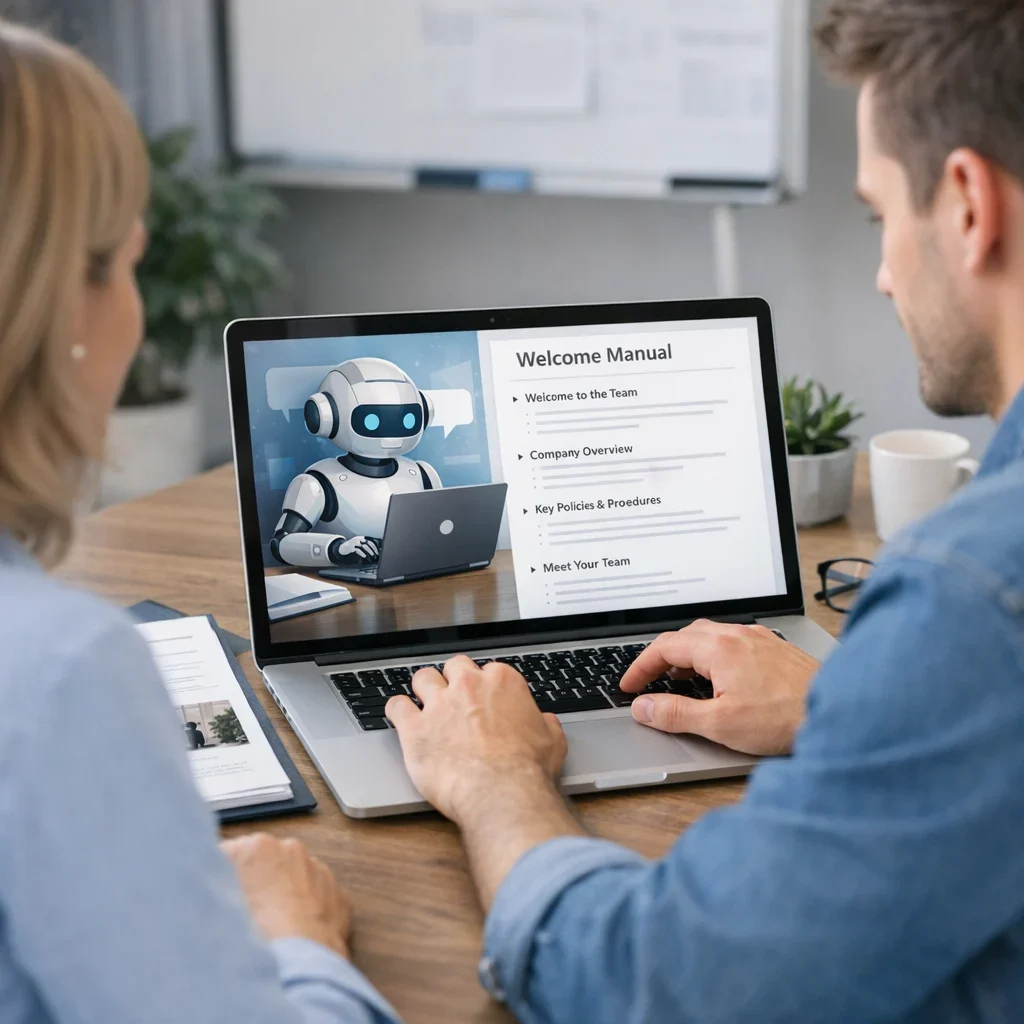
Using AI in onboarding can lead to personalized, interactive, and much more effective manuals. Here are some ways AI can transform this process:
- Personalization: AI can analyze the new employee's profile and tailor the manual's content to their specific needs.
- Interactivity: Chatbots can answer frequently asked questions in real-time, making the employee feel more supported.
- Constant Updates: AI can keep the manual's content up-to-date, preventing it from becoming obsolete.
Common Mistakes in AI Onboarding
- Creating a manual that is too lengthy, where useful information gets lost in the fluff.
- Not updating the content regularly, leading to incorrect or irrelevant information.
- Lack of personalization, making the manual generic and unappealing.
- Ignoring feedback from new employees, which can provide valuable insights into the process.
Quick Tips for Effective AI Onboarding
- Use AI tools that offer data analysis to tailor content to each profile.
- Incorporate visual and multimedia elements to make the manual more engaging.
- Implement a feedback system to continuously improve the process.
- Include a frequently asked questions section that automatically updates based on common inquiries.
- Ensure the manual is accessible from any device, facilitating consultation at any time.
| Element | What to Check | Red Flag | Action |
|---|---|---|---|
| Manual Content | Check if it is up-to-date | Outdated information | Update the content |
| Interactivity | Check chatbot functionality | Incorrect responses | Improve response settings |
| Personalization | Verify adaptation to different profiles | Generic manual | Implement personalization logic |
| Feedback | Gather opinions from new employees | Lack of responses | Establish a feedback system |
Implementing AI in Onboarding: Practical Steps
Now that you know what onboarding is and how AI can improve the process, it’s time to take action. Here’s a practical guide to implementing artificial intelligence in your welcome manual.
1. Define Onboarding Objectives
Before diving into content creation, it’s essential to know what you want to achieve. Ask yourself:
- What critical information do new employees need?
- How can you make this information accessible and engaging?
- What AI tools do you have available and how can they assist you?
2. Selecting AI Tools
There are multiple tools on the market that can facilitate onboarding. Here are some you might consider:
- Learning Management Platforms: Allow for the creation of interactive courses and tracking of progress.
- Chatbots: Ideal for answering frequently asked questions and guiding new employees through the process.
- Data Analysis Software: Helps personalize content based on the needs of each new employee.
3. Content Creation
Now comes the creative part. This is where AI can help you draft a manual that isn’t dull. Consider the following:
- Use a conversational and direct tone. No one wants to read a document that sounds like a boring report.
- Incorporate multimedia elements: videos, infographics, or even podcasts. Variety keeps interest alive.
- Utilize AI to generate content tailored to different profiles. For example, a manual for a programmer might focus on technical tools, while one for a salesperson would center on sales culture.
4. Test and Adjust
After creating your manual, it’s time to test it. Here’s where feedback comes into play:
- Have a group of new employees review it and provide feedback. Ask what they found useful and what they did not.
- Use data analysis to see if the content is effective. Are new employees reaching productivity faster?
- Make adjustments based on the feedback and data collected. Remember, the goal is continuous improvement.
Practical Example of a Welcome Manual with AI
To give you an idea of how a welcome manual using AI can look, here’s an example of how to structure it:
| Section | Content | AI Element |
|---|---|---|
| Introduction | Welcome to the company, mission and vision. | Video presentation of company culture. |
| Company Policies | Key rules and regulations. | Chatbot to answer questions about policies. |
| Work Tools | Guide on software and hardware used. | Interactive course on tool usage. |
| Team | Introduction of coworkers and their roles. | Interactive employee profiles with AI. |
As you can see, the key is to make each section useful, engaging, and, above all, easy to digest. With a bit of creativity and the right tools, your welcome manual can become a powerful asset for onboarding new employees.
So, don’t fall behind. Harness the potential of AI to make onboarding a much more effective process and, why not, a bit more fun. Let’s get to work!
The Magic of Personalization in AI Onboarding
If there’s one thing AI can do better than any human (well, almost), it’s personalizing the experience. Forget about welcome manuals that seem to be written for an alien. Personalization is key to making the new employee feel valued from day one. Here are some practical ideas to achieve this:
- Employee Profiles: Use AI to create detailed profiles of new employees. Are they engineers, salespeople, or designers? Tailor the manual content according to their specific role.
- Learning Preferences: Ask new employees how they prefer to learn: through videos, readings, or hands-on exercises? AI can help adapt the material to their preferences.
- Real-Time Feedback: Implement tools that allow new employees to provide feedback on the content they are consuming. AI can analyze this feedback and suggest changes instantly.
Example of Personalization in Action
Imagine you have a new engineer joining your team. Instead of sending them a generic manual, AI can generate a manual that includes:
- A welcome video from their technical team.
- Links to specific tutorials on the tools they will use.
- A section with frequently asked questions that other engineers have had in their first week.
With this, you not only provide them with the information they need, but also show that you care about their integration and have considered their needs from the very beginning.
The Importance of Continuous Feedback
Once the new employee has gone through onboarding, don’t leave it in the past. Continuous feedback is crucial for improving the process. Here are some steps to implement it:
- Periodic Surveys: Send surveys to new employees after their first week and after a month. Ask about their experience with the manual and if there’s anything to improve.
- Follow-Up Meetings: Organize informal meetings to discuss how they are feeling in their new role and if they have questions about the manual content.
- Data Analysis: Use analysis tools to evaluate the performance of new employees. If you see someone taking longer to adapt, review the content provided to them.
Remember, AI is not just for creating content, but also for learning from experience. The more feedback you gather, the better you can adjust the onboarding process.
Example of Feedback in Action
Suppose that after a month, a new employee mentions in the survey that they would like to have more practical examples in the manual. With this information, you can update the content and add a section with relevant case studies, which will not only enhance their experience but also benefit future employees.
Conclusion: AI Onboarding as a Competitive Advantage
Implementing effective onboarding with AI is not just about modernity; it’s a competitive advantage. Companies that adapt to new technologies and focus their processes on personalization and continuous feedback will be a step ahead in talent retention.
So, if you want your company to be not just a workplace, but a place where employees feel valued and motivated from day one, it’s time to put into practice everything we’ve discussed! Don’t let onboarding be a mere formality; turn it into a memorable experience. Because at the end of the day, a happy employee is a productive employee. Let’s go for it!
Updated on 11/10/2025. Content verified with experience, authority, and trustworthiness criteria (E-E-A-T).
FAQ about AI Onboarding
What AI tools are useful for onboarding?
There are multiple tools that can facilitate this process, from learning management platforms to chatbots that provide 24/7 support. The key is to choose those that best fit the needs of your company and new employees.
Is it necessary to invest a lot in AI to improve onboarding?
Not necessarily. There are affordable solutions, and some are even free, that can make a difference. The important thing is to know what you need and find the right tool that fits that budget.
How do I measure the success of AI onboarding?
To evaluate the effectiveness of onboarding, you can analyze the time it takes for new employees to reach productivity, the retention rate, and overall satisfaction with the process. The easier and more efficient the onboarding, the better the employee experience.
Can I automate the entire onboarding process?
While AI can help a lot, it’s advisable to maintain a balance. Part of the onboarding should include human interaction, as this can facilitate the new employee's integration into the company culture.
What if the welcome manual is not effective?
If the manual does not fulfill its purpose, don’t worry; there’s always time to improve. Take feedback into account and make adjustments. Remember that the goal is for the employee to feel welcomed and prepared for success.
In summary, AI onboarding is not just a trend but a necessity in today’s business world. With the right tools and a focus on personalization and interactivity, you can transform the integration experience for your new employees and, in the process, make everyone's job a little easier. So, what are you waiting for to put it into practice?