
Does Collagen Really Benefit Your Joints or Is It Just Hype?

When you arrive at the office after an intense gym session or a long day on your feet, your joints might be crying out for some help. In this context, collagen for joints has become the new hero of physical wellness, but does it really deliver on its promises or is it just another marketing trick? Let's break it down.
What is Collagen and Why Is It Important for Your Joints?
Collagen is an essential protein that is part of our tissues, including cartilage, skin, and bones. Natural collagen production in the body decreases with age, which can lead to issues like joint stiffness and cartilage wear. At the gym, for instance, that lack of collagen can make squats feel torturous rather than beneficial. The question is, can a collagen supplement really help alleviate these issues?
Support the project or tell me what topic to cover next.
Benefits of Collagen for Joints
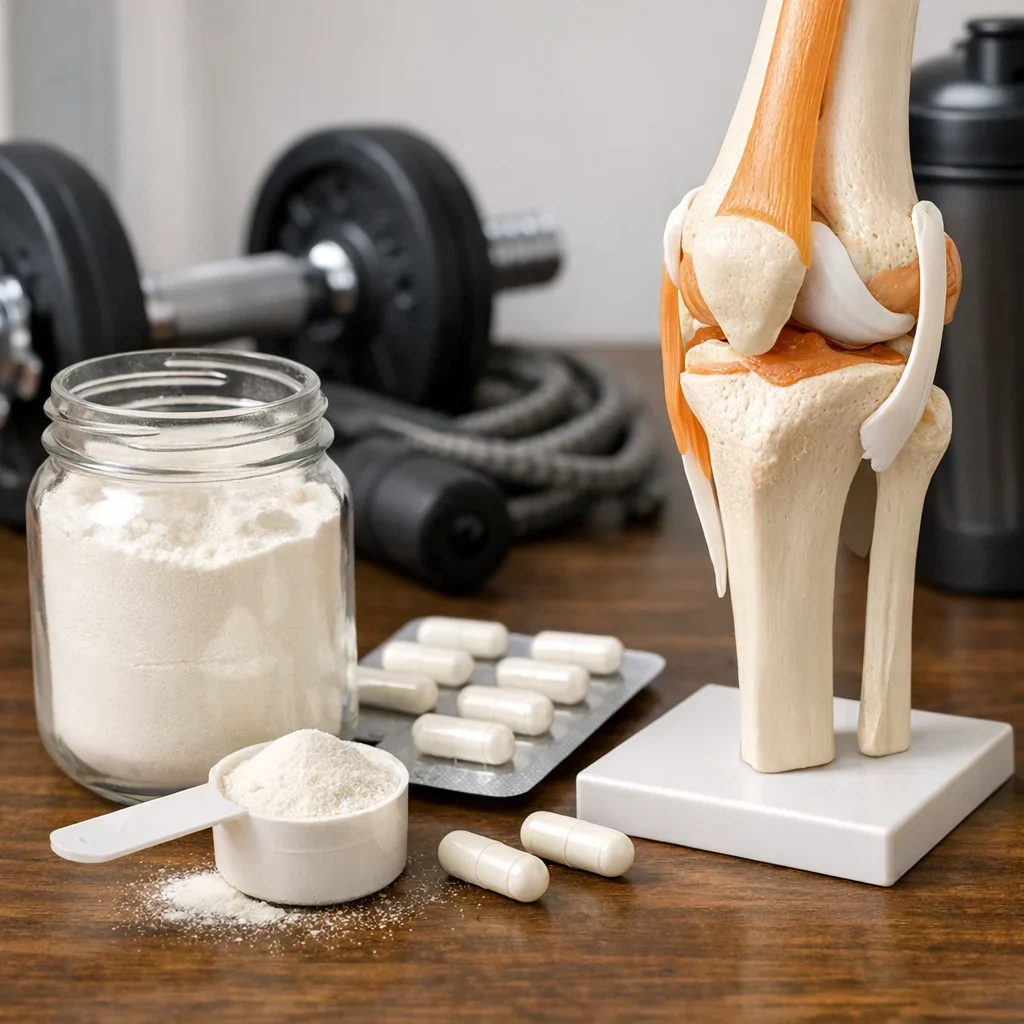
- Reduction of Joint Pain: Several studies suggest that collagen may help reduce pain in people with osteoarthritis and other joint conditions.
- Improvement of Mobility: It can contribute to greater flexibility and range of motion, something we all seek, especially after a long workday.
- Cartilage Regeneration: Collagen has been observed to assist in cartilage regeneration, which is crucial for maintaining healthy joints.
Types of Collagen and How to Choose the Right One
There are several types of collagen, but the most relevant for joints are type I and III (which provide structure) and type II (specific for cartilage). When choosing a supplement, make sure it contains type II collagen, as it is the most effective for improving joint health.
| Type of Collagen | Main Function | Sources |
|---|---|---|
| Type I | Forms skin, tendons, and bones | Chicken skin, fish |
| Type II | Specific for cartilage | Chicken cartilage, supplements |
| Type III | Forms skin and blood vessels | Pork skin, supplements |
Common Mistakes When Using Collagen
- Not taking it regularly: Consistency is key. Don’t expect miracles if you only take it occasionally.
- Choosing the wrong form: Some prefer powder, others pills. Pick the one that’s most convenient for you.
- Unrealistic expectations: It’s not a magic remedy. It should complement your diet and exercise, not replace a healthy lifestyle.
- Ignoring the source: Ensure it’s of good quality and preferably from natural sources.
Quick Tips to Incorporate Collagen into Your Routine
- Choose a type II collagen supplement to improve your joints.
- Incorporate foods rich in vitamin C, like oranges and peppers, which help in collagen production.
- Try adding collagen powder to your smoothies or coffees.
- Consistency: Take it daily to see long-term results.
Updated on 10/11/2025. Content verified with experience, authority, and trustworthiness criteria (E-E-A-T).
FAQ
How long does it take for collagen to work on joints?
Generally, you can start noticing improvements within 4 to 8 weeks of consistent use. However, results may vary depending on the individual and their lifestyle.
Is it necessary to take collagen if I follow a balanced diet?
While a balanced diet can provide some nutrients necessary for collagen production, supplements can be beneficial for those suffering from joint issues or simply wanting to improve their joint health.
Are there any side effects from taking collagen?
In general, collagen is safe for most people, although some may experience gastrointestinal discomfort. It’s always advisable to consult a doctor before starting any supplement.
Is collagen suitable for vegans?
Collagen supplements are usually animal-derived, so they are not suitable for vegans. However, there are plant-based alternatives that can help stimulate collagen production in the body.
Can I combine collagen with other supplements?
Yes, collagen can be combined with other supplements like glucosamine and chondroitin, which are also beneficial for joint health. Be sure to consult a healthcare professional to determine the best combination for you.
So there you have it, collagen can be a great ally for your joints, but like everything in life, it’s not the magic solution that it’s sometimes made out to be. Combine it with a good diet and exercise, and you’ll see how your joints will thank you. Are you ready to give it a try?