
Essential Guide to Data Anonymization Before Using AI
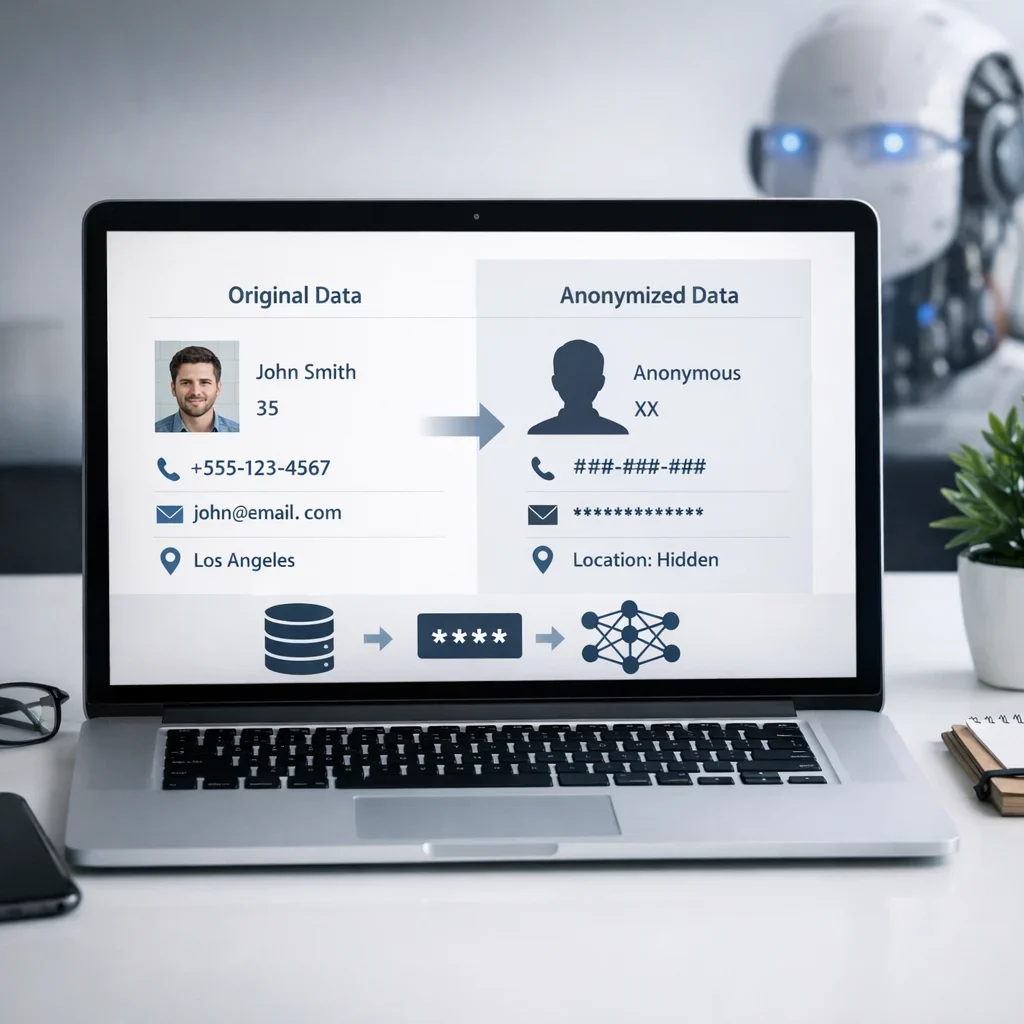
In Spain, where personal data protection is a serious matter regulated by the GDPR, anonymizing data for AI is not just an option but a necessity for any company looking to leverage artificial intelligence without landing in legal trouble. Anonymization is the process that allows the use of real data to train AI models without revealing identifiable information about individuals, striking a delicate balance between utility and privacy. Here’s how to do it simply, practically, and without hassle.
Why is it Crucial to Anonymize Data Before Using AI?
Using personal data without protection can lead to hefty fines and a reputational damage that you'll remember for years. Moreover, in Spain, the Spanish Data Protection Agency closely monitors the use of sensitive data without safeguards. Anonymization is key for your company to harness the benefits of AI, such as improving ERP or CRM systems, without losing control or trust from your clients and employees.
Support the project or tell me what topic to cover next.
Basic Steps to Anonymize Data in AI Projects
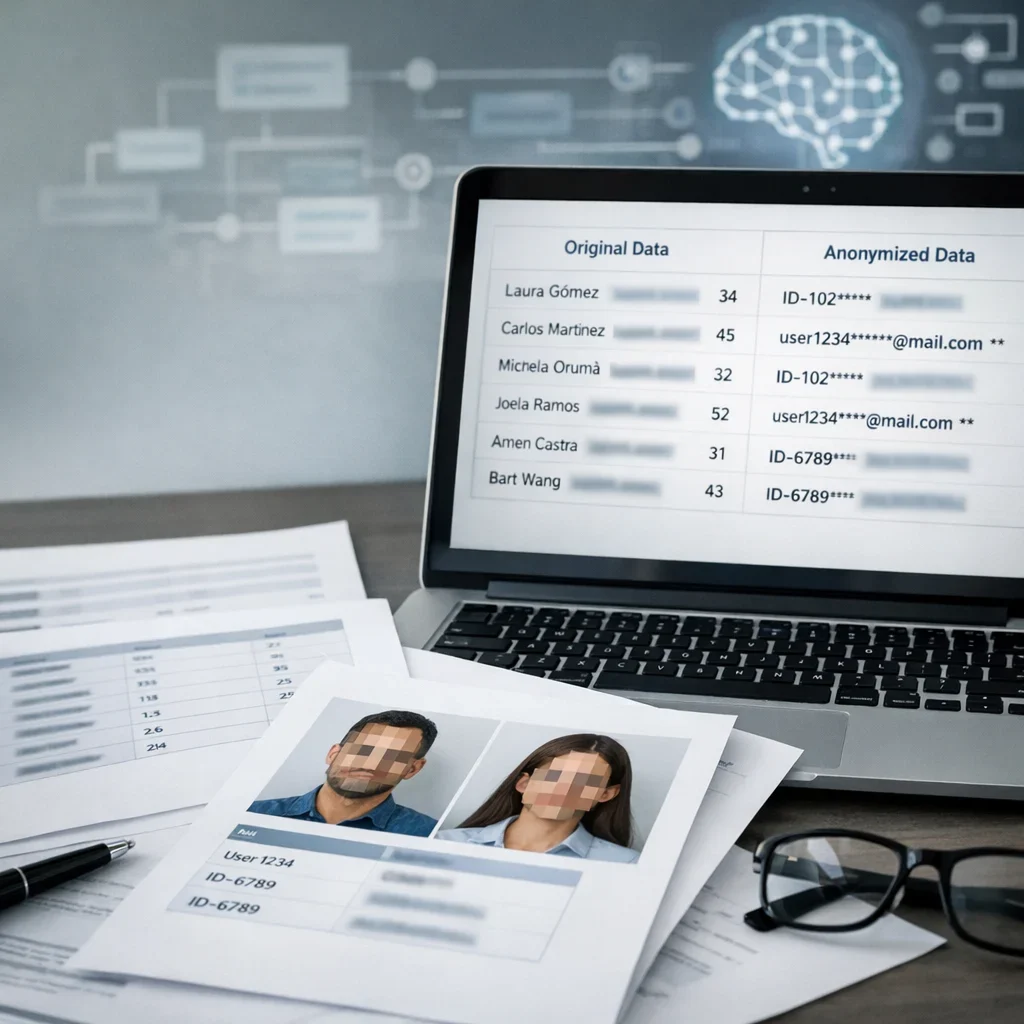
Forget the notion that anonymizing data is only for cybersecurity experts. With these clear steps, anyone can do it right:
1. Identify Sensitive Data
First, detect what information can identify a person: names, ID numbers, emails, IP addresses, phone numbers, etc. This also includes indirect data that could be used for re-identification, such as birth dates combined with location.
2. Choose the Right Technique
Not all techniques are suitable for every case. The most common ones are:
- Masking: hiding part of the data, such as placing asterisks in an ID number.
- Aggregation or Generalization: converting precise data into ranges or categories, such as age in decades.
- Suppression: completely removing sensitive fields.
- Pseudonymization: replacing identifying data with codes, but retaining the possibility of controlled reversion.
3. Validate Anonymization
Anonymization cannot be sloppy. You must ensure that there is no reasonable way to recover the real identity. To do this, you can apply re-identification tests or use specific anonymization tools.
4. Document the Entire Process
If the Data Protection Agency asks you, you must demonstrate that you did the right thing. Keep clear and detailed records of what data you anonymized, how, and when.
Common Mistakes When Anonymizing AI Data
- Believing that just removing names is enough: Indirect data can also identify people if not handled properly.
- Using pseudonymization as total anonymization: It is a security measure, but does not guarantee complete anonymity.
- Not validating the anonymization: Without re-identification tests, you risk someone being able to reconstruct the identity.
- Forgetting to update: Anonymized data today may cease to be so tomorrow if techniques change or are cross-referenced with new databases.
- Not informing stakeholders: Internal communication and training are key for effective and consistent anonymization.
Quick Tips for Anonymizing Data Before Using AI
- Always start with a risk analysis: Know what data you have and what impact its exposure would have.
- Apply multiple techniques: Don’t rely on a single method; combination is safer.
- Automate processes: Use specialized software to avoid human errors and save time.
- Review current legislation: GDPR and AEPD guidelines change, stay updated.
- Involve your IT and legal teams: Collaboration is essential to avoid missteps.
Comparison of Anonymization Techniques for AI Data
| Technique | Advantages | Disadvantages | Recommended Use |
|---|---|---|---|
| Masking | Easy to implement; protects visible data | Can be reversible; does not eliminate underlying data | Data with high visual sensitivity (e.g., card numbers) |
| Aggregation | Maintains statistical utility; reduces identification risk | Loss of precision; may affect model results | Demographic data and numerical variables |
| Suppression | Eliminates direct risk; straightforward | Reduces the dataset; may affect analysis | Fields with irrelevant data for AI |
| Pseudonymization | Allows controlled tracking; protects identity | Not complete anonymization; requires secure key management | Cases needing controlled reversion |
Tools and Resources for Data Anonymization in Spain
There are several open-source or commercial tools that allow for efficient data anonymization, but remember that none are magic. At Berraquero.com, we have delved into how to integrate AI into ERP and CRM systems while respecting privacy, a good complement to understanding the complete landscape.
Additionally, the Spanish Data Protection Agency provides specific guides and recommendations for data processing and anonymization that are worth consulting.
Updated on 11/10/2025. Content verified with experience, authority, and trustworthiness criteria (E-E-A-T).
FAQ: Frequently Asked Questions about Data Anonymization for AI
Is anonymization the same as pseudonymization?
No, they are not the same. Anonymization means that data cannot be linked to any individual, even with additional information. In contrast, pseudonymization replaces identifiers with codes that can be reverted if access to the key is available, so it does not guarantee complete anonymity.
Can I use anonymized data to train any AI model?
Generally, yes. Anonymized data is the best option to avoid legal and ethical issues. However, you must verify that the anonymization has not removed the necessary value for the AI to learn correctly. Sometimes, excessive anonymization can reduce the model's quality.
What happens if I use personal data without anonymization and suffer a breach?
If you have not protected the data with anonymization or at least pseudonymization, and a breach occurs, you may face significant financial penalties, as well as losing the trust of clients and partners. In Spain, the AEPD is not usually lenient with such negligence.
What free tools can I use to anonymize data?
There are several open-source options like ARX Data Anonymization Tool or Amnesia. There are also specific Python libraries for anonymization. Just make sure to choose the one that best fits your data and needs, and don’t forget to conduct re-identification tests.
When should I update the anonymization of my data?
Anonymization is not a one-time process. You should review and update your measures, especially when attack techniques change, when you add new data, or when legislation changes. Staying alert is the best defense.