
Leveraging AI to Combat Internal Fraud: Key Signals and Legal Boundaries
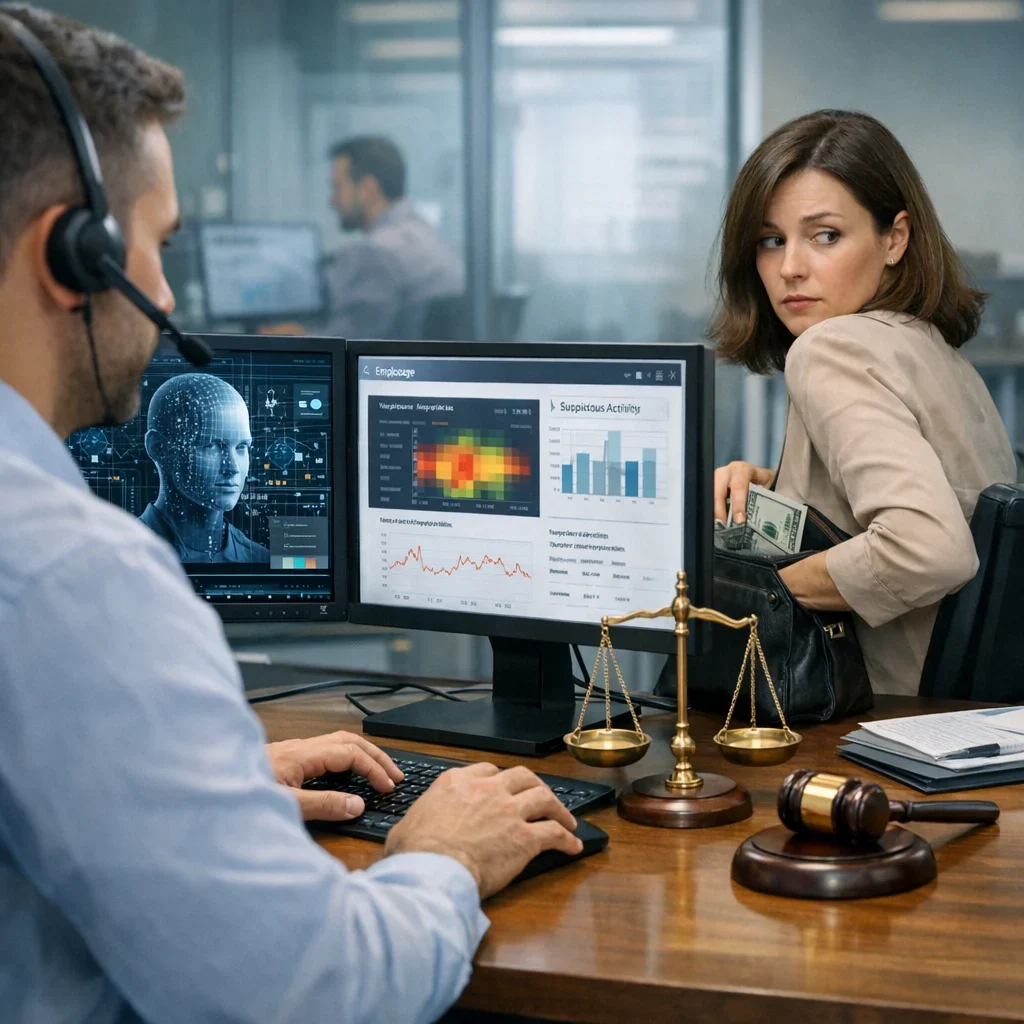
AI for detecting fraud has become a vital tool in the business world, whether in an office, a family business, or even at the gym, where people sometimes take what isn't theirs. Technology is advancing rapidly, and with it, methods to identify suspicious behaviors in the workplace. Understanding the warning signs and legal limits is essential to maintain the integrity of any organization.
Warning Signs of Internal Fraud
Identifying internal fraud can be more challenging than finding a needle in a haystack. However, there are certain warning signs that may indicate something is amiss. Here are a few to watch for:
Support the project or tell me what topic to cover next.
- Behavioral changes: An employee who was punctual and reliable starts arriving late or missing work without apparent reason.
- Discrepancies in figures: If the numbers don't match reality, it's time to investigate. Watch out for discrepancies between accounts and reports.
- Unusual access to data: If someone is accessing sensitive information without a clear justification, it's a red flag.
- Resistance to oversight: Employees who avoid audits or are reluctant to share information may be hiding something.
- Excessive familiarity with vendors: When an employee has suspicious relationships with suppliers, caution is warranted.
How Does AI Work in Fraud Detection?

Artificial intelligence can analyze large volumes of data in real-time, identifying patterns that might go unnoticed by humans. Here are some methods where AI can be beneficial:
- Machine learning: Algorithms learn from historical data and can predict fraudulent behaviors.
- Pattern analysis: AI can identify anomalous behaviors in resource usage, transactions, or any activity involving money.
- Anomaly detection: Thanks to its capabilities, AI can flag activities that do not align with the usual employee profile.
Legal Limits in Fraud Detection
It is essential for companies to understand that while AI can be a powerful tool for detecting fraud, there are also legal boundaries that must not be crossed. Here are some points to consider:
- Data protection: Data protection laws, such as GDPR, set strict rules on how personal data can be handled and processed.
- Consent: It is crucial to obtain employee consent before implementing surveillance systems that use AI.
- Transparency: Company policies must be clear about how data will be used and for what purpose.
Common Mistakes in AI Implementation
When implementing AI systems to detect fraud, there are several mistakes that can be costly in terms of time and resources. Here are some of the most common:
- Not clearly defining the objectives of AI.
- Underestimating the importance of staff training.
- Ignoring privacy laws and regulations.
- Not conducting sufficient testing before implementation.
- Relying solely on technology without human oversight.
Quick Tips for Using AI in Fraud Detection
To maximize the benefits of AI in fraud detection, here are some quick tips:
- Set clear objectives from the start.
- Train your team on how to use the tool effectively.
- Regularly review and adjust your algorithms.
- Always combine AI with human intuition.
- Ensure compliance with current legal regulations.
| Category | Description | Example of Fraud Signal |
|---|---|---|
| Behavior | Changes in work routine | An employee who was always willing to help starts isolating themselves |
| Finance | Discrepancies in reports | Differences between reported and actual income |
| Data Access | Unauthorized access | An employee accesses sensitive information that is not relevant to them |
| Work Relationships | Suspicious connections | An employee has an unusual relationship with a supplier |
The Role of AI in Fraud Prevention
AI for detecting fraud is not limited to identifying suspicious activities; it also plays a crucial role in prevention. Proactivity is key here. While detection is important, preventing fraud before it occurs is even better. Here are some strategies you can implement:
- Predictive models: Use algorithms that analyze historical data to foresee risky behaviors. For example, if an employee has a history of minor irregularities, the system can flag them as a potential future risk.
- Real-time alerts: Set up automatic notifications that trigger in response to unusual transactions. This allows you to act before fraud materializes. Imagine receiving an alert on your phone when someone tries to transfer an unusual amount of money.
- Continuous training: Don’t overlook training. Ensure your team is aware of the latest fraud trends and how AI can help. Organize workshops and informational sessions on identifying warning signs.
Common Mistakes When Using AI to Detect Fraud
Implementing AI is not a walk in the park. Companies often stumble upon pitfalls that could be avoided. Here are some of the most common mistakes you should steer clear of:
- Lack of customization: Using a generic approach can lead to ineffective results. Every company has its own environment and culture, so tailor AI tools to your specific needs.
- Underestimating human intelligence: AI is powerful, but not infallible. Don’t rely solely on it. Human oversight is vital for interpreting data and making informed decisions.
- Ignoring feedback: If your AI system isn’t performing as expected, don’t ignore it. Gather user feedback and make adjustments as needed.
| Common Error | Consequence | Solution |
|---|---|---|
| Lack of customization | Ineffective results | Adapt AI to the specific needs of the company |
| Underestimating human intelligence | Wrong decisions | Include human oversight in the process |
| Ignoring feedback | Persistent failures | Regularly collect and apply feedback |
The Future of AI in Fraud Detection
If you thought AI had reached its peak, think again. The future promises even more advancements. Here are some trends that could shape the future of fraud detection:
- Integration with blockchain: The combination of AI and blockchain could offer unprecedented levels of transparency and security. Transactions would be recorded immutably, making fraud more difficult.
- Explainable AI: The next generation of AI will not only identify patterns but also explain why it considers something suspicious. This could help humans better understand AI decisions.
- Increased focus on ethics: As AI becomes a common tool, ethics in its use will become more critical. Companies must ensure their practices are fair and respect employee privacy.
AI for detecting fraud is not just a passing trend; it is a tool that, when used correctly, can transform how organizations manage their integrity. But like everything in life, success lies in balance. Combining technology with common sense is the way forward.
Updated on 11/10/2025. Content verified with experience, authority, and trustworthiness criteria (E-E-A-T).
FAQ
What types of fraud can AI detect?
AI can identify a variety of frauds, from misuse of financial resources to unauthorized access to sensitive information. It can also help detect identity fraud and data manipulation.
Is it legal to use AI to monitor employees?
Yes, but it must be done in compliance with data protection regulations and ensuring that employees are informed about monitoring and give their consent.
How can I start implementing an AI system to detect fraud?
The first step is to clearly define your objectives. Then, select an appropriate tool, train your staff, and ensure compliance with all relevant laws. Seek legal advice if necessary.
Can AI completely replace human auditors?
No, AI is a powerful tool, but it cannot replace human intuition and judgment. It should be used as a complement to traditional auditing.
Are there organizations that regulate the use of AI in the workplace?
Yes, in many countries, there are regulations that oversee the use of AI, especially regarding privacy and data protection. You can consult sources like the Spanish Data Protection Agency for more information.