
Mastering Hydration in the Gym: How Much Water Do You Really Need?
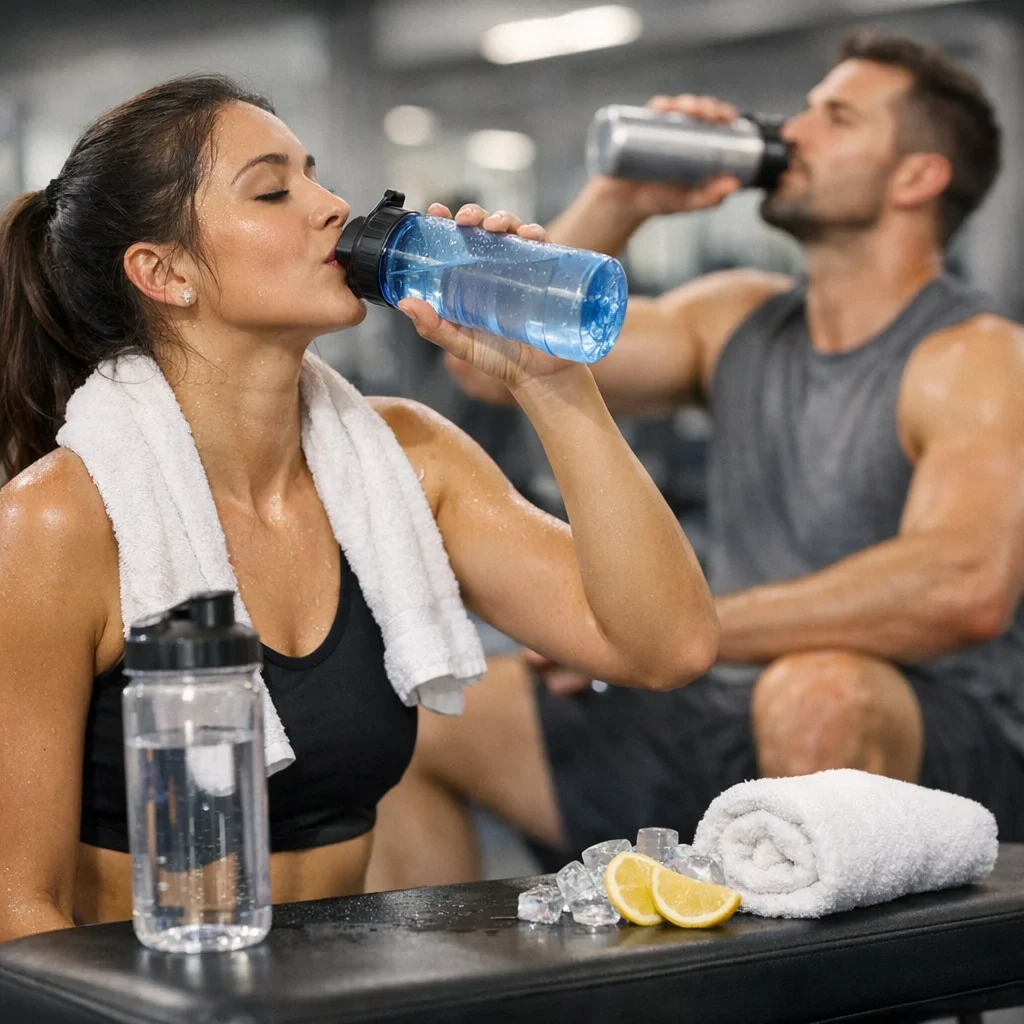
If you train in Spain, you know that hydration during workouts is not just a trend or an excuse to carry a giant bottle. Here, amidst the humidity of the north or the dry heat of the south, staying well-hydrated during exercise is key to performing without turning into a tomato halfway through your session. But how much should you really drink? Let's debunk myths and provide you with concrete data so you neither overdo it nor fall short.
Why Hydration is Vital for Gym Performance
Water is the silent fuel that keeps your biological machinery running. Without adequate hydration, your body loses efficiency, your brain operates in "low power" mode, and your muscles complain mercilessly. In Spain, where the climate and lifestyle can be quite varied, understanding how water affects your training is essential.
Support the project or tell me what topic to cover next.
When you sweat, you lose fluids and electrolytes like sodium and potassium. If you don't replenish them, fatigue sets in sooner, recovery slows down, and the risk of injuries or cramps increases. Additionally, poor hydration affects concentration and balance, things you definitely don't want to test in the gym or on the street.
How Much Water Should You Drink During Training?
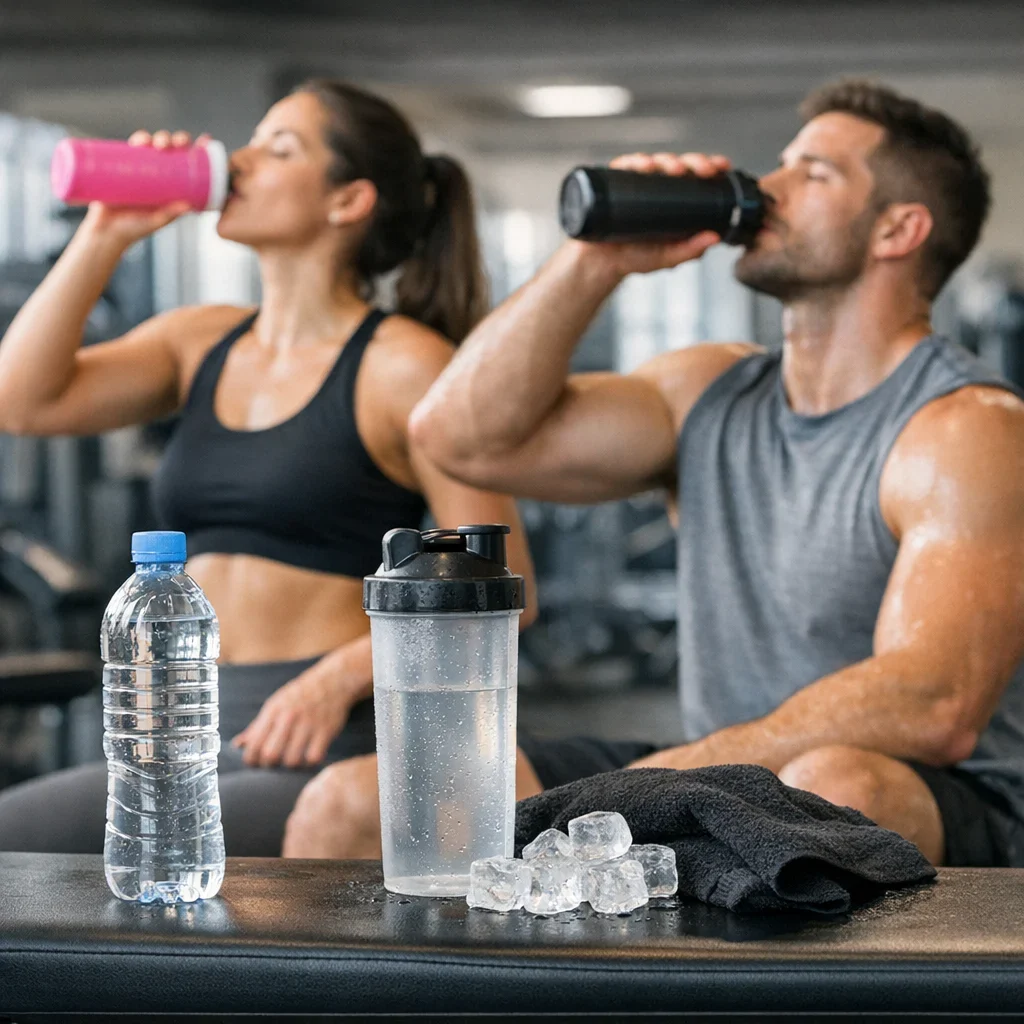
Forget the "2 liters a day" rule as a one-size-fits-all mantra. The ideal amount varies based on many factors: your weight, exercise intensity, ambient temperature, and session duration. In Spain, with summers that make you sweat buckets and air-conditioned offices that dry you out more than a desert, the trick is to adapt your hydration to the context.
As a basic reference:
- Before training: approximately 500 ml, 2 hours before exercise to ensure your body is well-prepared.
- During training: between 150 and 350 ml every 15-20 minutes, adjusting if you sweat a lot or if the session is particularly intense or long.
- After training: 500 ml or more to recover what you've lost, ideally combining water with some electrolytes if sweating has been high.
If you've sweated more than 1 liter (yes, it happens in Spain during summer or intense sessions), replenishment should include mineral salts, not just water, to avoid electrolyte imbalance.
Common Hydration Mistakes in Training
- Drinking only when you're thirsty: Thirst is a late indicator. In reality, when you're thirsty, you're already somewhat dehydrated.
- Overdoing it with water: Yes, hyponatremia exists. Drinking liters and liters without replenishing salts can be dangerous.
- Forgetting to hydrate before and after: Many focus only on drinking during training, but preparation and recovery are equally important.
- Using only very cold or very hot water: Very cold water can shock the body, and hot water doesn't refresh or aid absorption.
- Not adjusting intake based on climate or type of exercise: Training on a cold, dry day is not the same as on a hot, humid day in Madrid or Seville.
Quick Tips for Effective Hydration in the Gym
- Always carry a reusable bottle and fill it with water or quality isotonic drinks.
- If you sweat a lot, look for drinks with electrolytes, but without excessive sugars.
- Take small breaks to drink; it's better to sip little and often than to gulp a lot at once.
- Monitor the color of your urine: a light shade indicates good hydration, while dark means it's time to drink more water.
- Avoid caffeine or alcohol before and after training; they dehydrate more than you think.
- Adapt your hydration to the season. In winter, you also sweat and need to hydrate, even if you don't notice it as much.
Comparative: Types of Drinks for Hydration During Training
| Drink | Advantages | Disadvantages | When to Use |
|---|---|---|---|
| Water | Calorie-free, easy to obtain, hydrates well | Does not provide salts or energy | Short or low-intensity workouts |
| Isotonic Drinks | Replenishes electrolytes and provides quick energy | May contain added sugars | Long workouts (>1 hour) or high sweating |
| Caffeinated Drinks | Stimulates performance, mild diuretic effect | Can dehydrate if abused | Before training, in moderation |
| Diluted Natural Juice | Provides vitamins and some natural sugar | Can be too sweet or acidic for some | Recovery or light hydration |
Common Mistakes and Practical Tips Recap
If you want to delve deeper into performance and nutrition, Berraquero.com offers complementary guides that will help you better understand the relationship between diet, hydration, and exercise.
Updated on 11/10/2025. Content verified with experience, authority, and trustworthiness (E-E-A-T) criteria.
FAQ on Hydration During Training
Is it better to drink cold water or room temperature water during exercise?
Drinking water at a cool (not icy) temperature is usually advisable. Very cold water can cause digestive discomfort or cramps in some people, while lukewarm water is absorbed better and doesn't create thermal shock. In Spain, with the heat in summer, this doesn't mean you should drink it at 40 degrees, but don't overdo the ice either.
Can I replace water with energy drinks or juices during training?
For short, low-intensity workouts, water is sufficient and the healthiest option. In long or very intense sessions, isotonic or energy drinks with electrolytes can help, but watch out for sugar and additives. Diluted natural juices are an option for recovery, not for hydration during the session.
When is it necessary to take electrolytes during training?
If you sweat a lot or train for more than an hour, especially in hot climates like those in Spain during summer, replenishing electrolytes is crucial to avoid cramps and fatigue. Isotonic drinks or specific supplements will help you maintain mineral balance.
Does hydration affect weight loss during training?
The weight you lose through sweat is primarily water, not fat. That's why good hydration is key to ensuring weight loss is healthy and maintaining performance. Drinking less to "lose more weight" is a dangerous and misguided idea.
Is it necessary to drink before feeling thirsty?
Yes. Thirst is a late indicator of dehydration. Ideally, you should drink small amounts regularly before, during, and after exercise to keep your body balanced and avoid performance drops or health issues.
Finally, remember that proper hydration during exercise is a fundamental pillar for any fitness routine. At Berraquero.com, we've already explored how to enhance physical performance and sports nutrition, so combining all this information will take your training to the next level.