
Quick Guide to Identifying Fake Bank SMS Messages
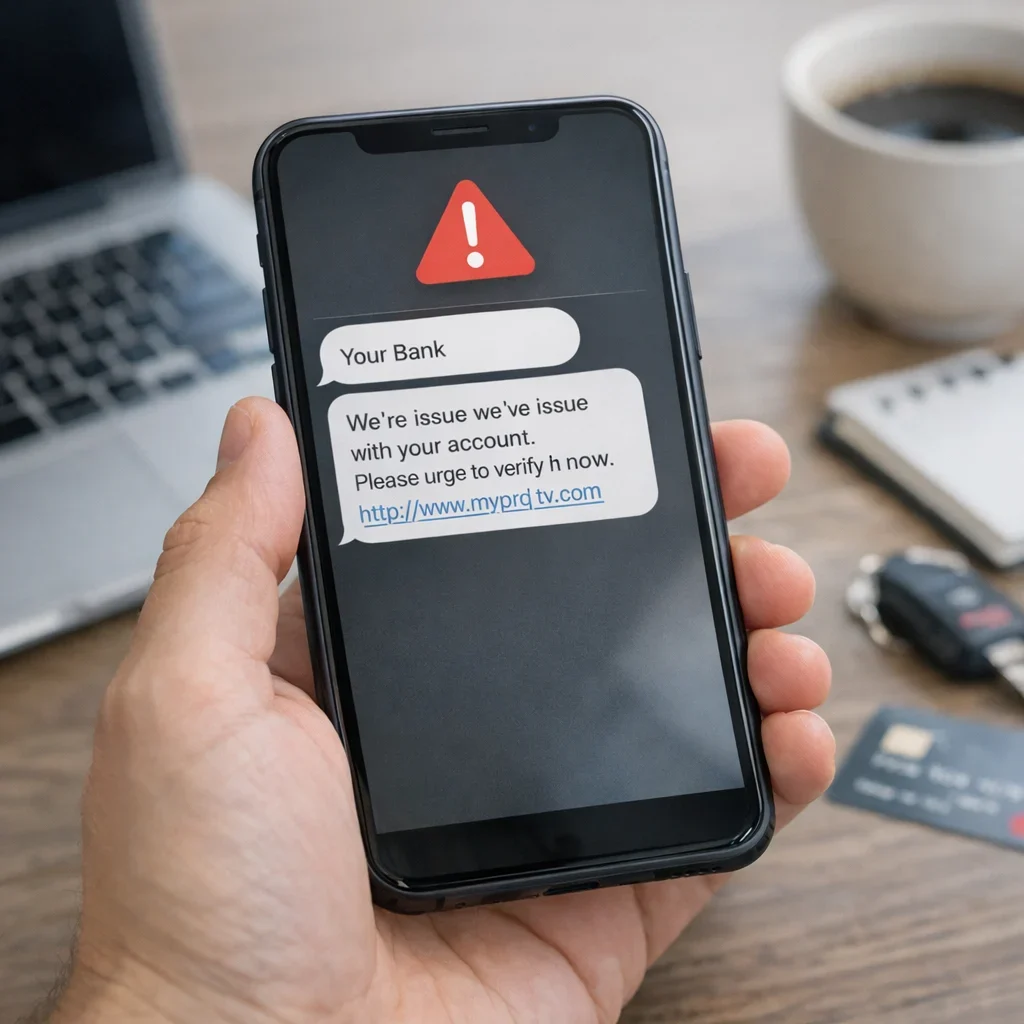
Receiving a text message claiming to be from your bank while at work, the gym, or relaxing at home can be startling. But before you drop your phone or panic, it's essential to know how to identify fake bank SMS to avoid traps that could empty your account or steal your data without you realizing it. Here, you won't find generic advice or free alarms; just what you really need to stay alert without becoming paranoid.
Why Fake Bank SMS Messages Still Work
Scammers know that SMS is one of the least monitored channels by users. The speed and familiarity of the format lead many to act without thinking. Additionally, the message often carries an urgent tone that pushes us to click quickly or call without reflection. The result: a highly effective social engineering attack.
Support the project or tell me what topic to cover next.
If you don't take a moment to analyze the message, you might end up giving away your credentials without realizing it, and that's no joke.
Features to Identify a Fake Bank SMS
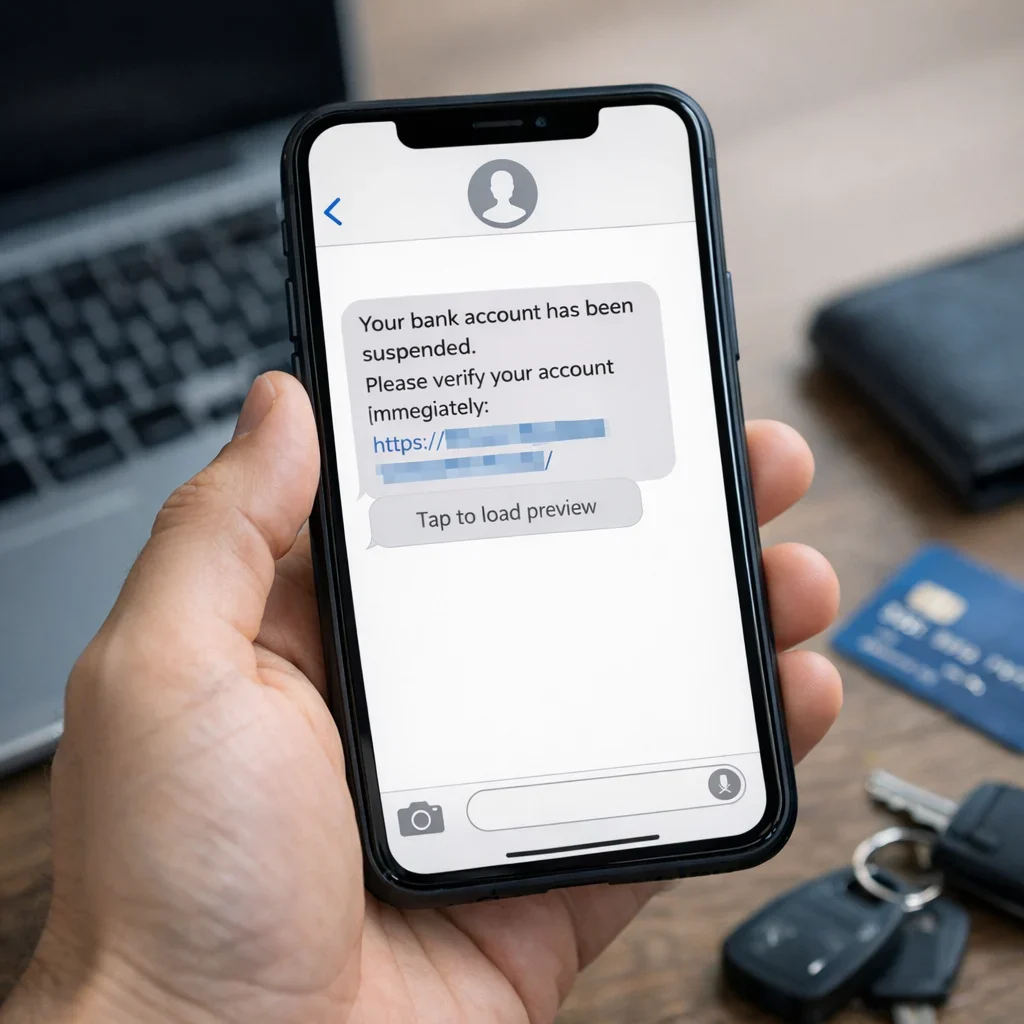
Let's get to the point: what should raise alarms when you receive an SMS supposedly from your bank?
| Indicator | Legitimate SMS | Fake SMS |
|---|---|---|
| Sender | Official bank name or number | Strange number or generic name (e.g., "Bank XYZ") |
| Urgency | May alert, but without pressure | Press to act quickly or lose access |
| Links | Recognizable URL, usually official domain | Shortened links or strange domains |
| Requests | Does not ask for sensitive data via SMS | Requests passwords, PINs, cards, or personal information |
| Spelling and Grammar | Correct, professional | Errors, strange phrases, or poorly translated |
Common Mistakes When Facing a Suspicious SMS
- Replying without thinking: Responding to the SMS can confirm that your number is valid and open the door to more attempts.
- Clicking the link directly: This is the quickest way to fall into the trap and have malware installed or data stolen.
- Calling the number in the SMS: It could be a fake number that redirects to scammers.
- Believing the bank will call or send SMS to ask for credentials: They never do.
- Ignoring verification with the bank: Not calling or contacting through official channels to confirm if the message is legitimate.
Quick Tips to Avoid Falling into the Trap
- Don't click: Never click a link in an SMS you weren't expecting or that raises doubts.
- Verify the sender: Check if the number or name matches the official ones.
- Consult the official app or website: If the message says there's a problem, access your online banking directly, not through the link.
- Call the official bank number: The one listed on the website or statements, not the one in the SMS.
- Check spelling carefully: Official messages pay attention to this; fakes usually have mistakes.
- Set up alerts in the banking app: This way, you'll be informed of transactions or issues without relying solely on SMS.
- Install antivirus on your phone: It can detect malicious links and prevent problems.
What to Do If You've Received a Fake SMS
First: don't panic. If you've clicked a link or replied, immediately change your passwords and contact your bank through official channels to report and block any suspicious access. You can also report the attempt to the authorities.
Remember that banks will never ask for sensitive data via SMS or unexpected calls. If something sounds off, it probably is.
Other Tools to Protect Your Digital Life
As we've seen in other guides on Berraquero.com about digital security, using VPNs, password managers, and two-factor authentication are essential allies to safeguard your personal and financial information. SMS is just one piece of the puzzle, and not the most reliable.
How to Educate the Less Experienced on Detecting These Scams?
In your business or family, sharing this practical guide can prevent issues. Everyone should know that an urgent SMS from the bank with suspicious links is almost always a fraud attempt. The key is calmness and verification.
Updated on 11/10/2025. Content verified with experience, authority, and trustworthiness criteria (E-E-A-T).
Frequently Asked Questions (FAQ)
How can I check if a SMS from my bank is fake without calling?
The best way is not to use the contact that appears in the SMS. Instead, access your bank's official app or website, or use the phone number listed on your statements or the bank's official page to confirm any alerts.
Why do banks never ask for passwords or data via SMS?
Because it is a less secure and vulnerable channel to attacks. Requesting sensitive data via SMS would go against their security protocols and could put their customers at risk.
What should I do if I have clicked on a suspicious link?
The first step is to change all your banking and money-related passwords. Then, urgently contact your bank to report and block unauthorized access. Also, consider reporting the incident to the relevant authorities.
Are there apps that help filter these fraudulent messages?
Some mobile security applications can filter suspicious messages, but they are not foolproof. The best defense is common sense and manual verification, combined with security tools.
Why shouldn't I trust SMS from short or unknown numbers?
Because scammers often use short numbers or generic names to impersonate legitimate entities. Banks typically use easily identifiable official names or numbers.
If you want to learn more, Berraquero.com has additional guides on how to protect your online privacy and digital habits that will help you navigate without surprises.
For official information and updated advice, you can always consult the website of the National Cybersecurity Institute (INCIBE), which offers reliable resources to protect yourself in the digital world.