
Anthropic's Model Hardware Standard: What Changes When an AI Agent Controls Real Machines
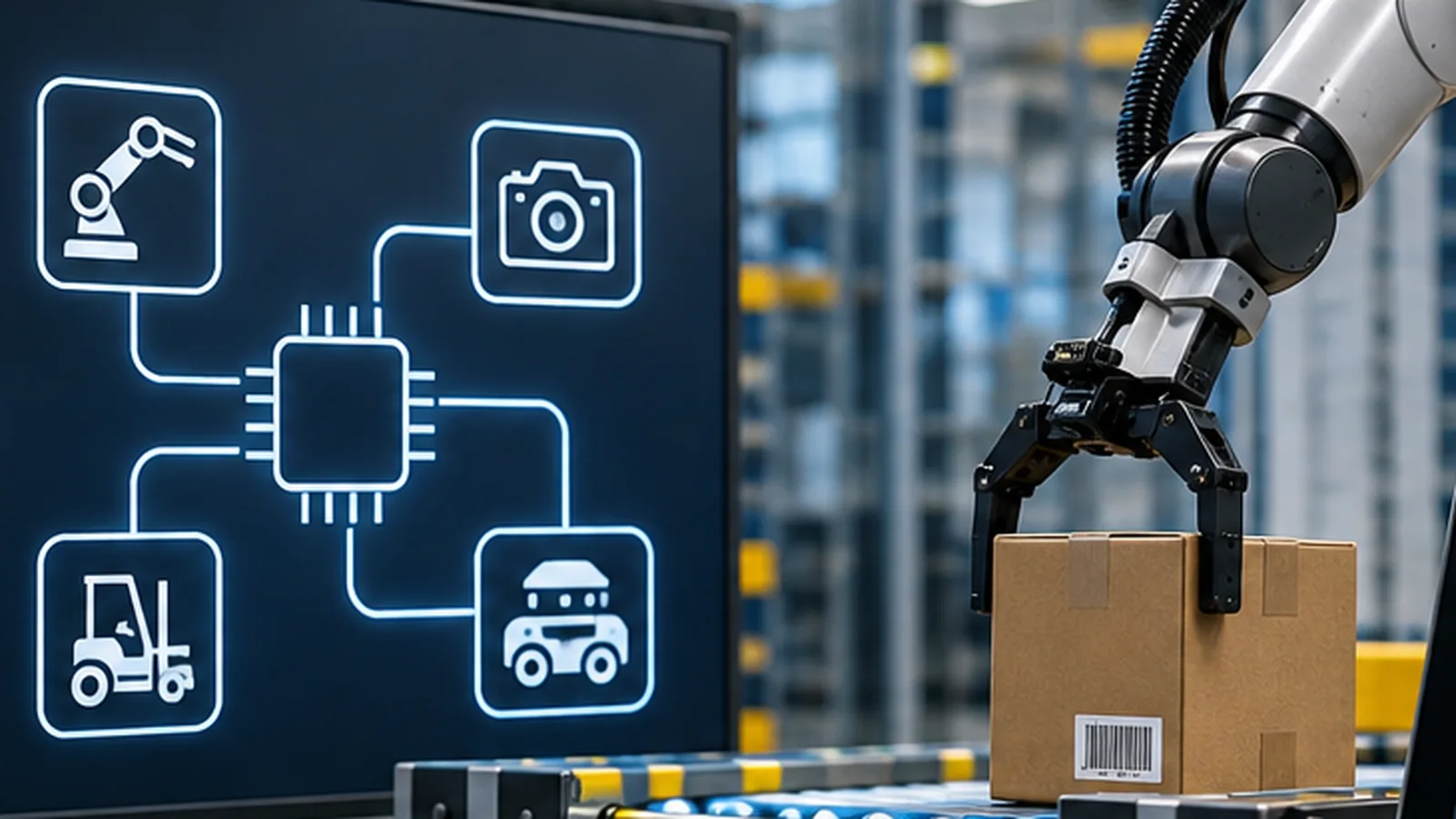
Having an AI assistant answer questions about a document is already common. The problem arises when we want it to also act on the physical world: opening a valve, reading a sensor, moving a robotic arm, or coordinating three machines from different manufacturers. In that case, a model that simply drafts convincing instructions is not enough. A verifiable way to describe each piece of equipment, limit its actions, and record what actually happens is necessary.
On August 27, 2026, Anthropic presented a research preview of the Model Hardware Standard (MHS), a shared specification for connecting AI agents with programmable physical devices. This proposal was developed in collaboration with HHMI Janelia Research Campus and is being tested with selected laboratories and manufacturers. It is far from being a universal solution ready to be installed in any company. Its value lies in the idea it proposes: to offer a common technical language between the software of an agent and the machines it must operate.
The Problem of Connecting Machines That Don't Understand Each Other
Imagine a laboratory analyzing samples with an automatic pipettor, a plate reader, and a robotic arm. Each piece of equipment may have its own program, manufacturer, and particular way of receiving commands. If the manager wants to automate a sequence, they need to connect components that initially do not share an interface.
A similar situation can occur in a small industrial company with a meter, a cutting machine, and a quality control system. Although each device works correctly on its own, integration requires time, knowledge of the manufacturer, and safety testing. Introducing an AI agent into that setup without first resolving communication increases complexity.
MHS aims to normalize part of that dialogue. Anthropic describes drivers that present the capabilities of each device through recognizable operations—such as reading a measurement or writing a parameter—and metadata about their characteristics and limits. The system also includes access methods via MCP, command line interfaces, and code.
What is important for an operations manager is to understand what remains outside of that promise. Just because two machines expose compatible commands does not mean that a complete industrial process is safe, validated, or can operate without supervision.
What is Proven and What is Still Experimental
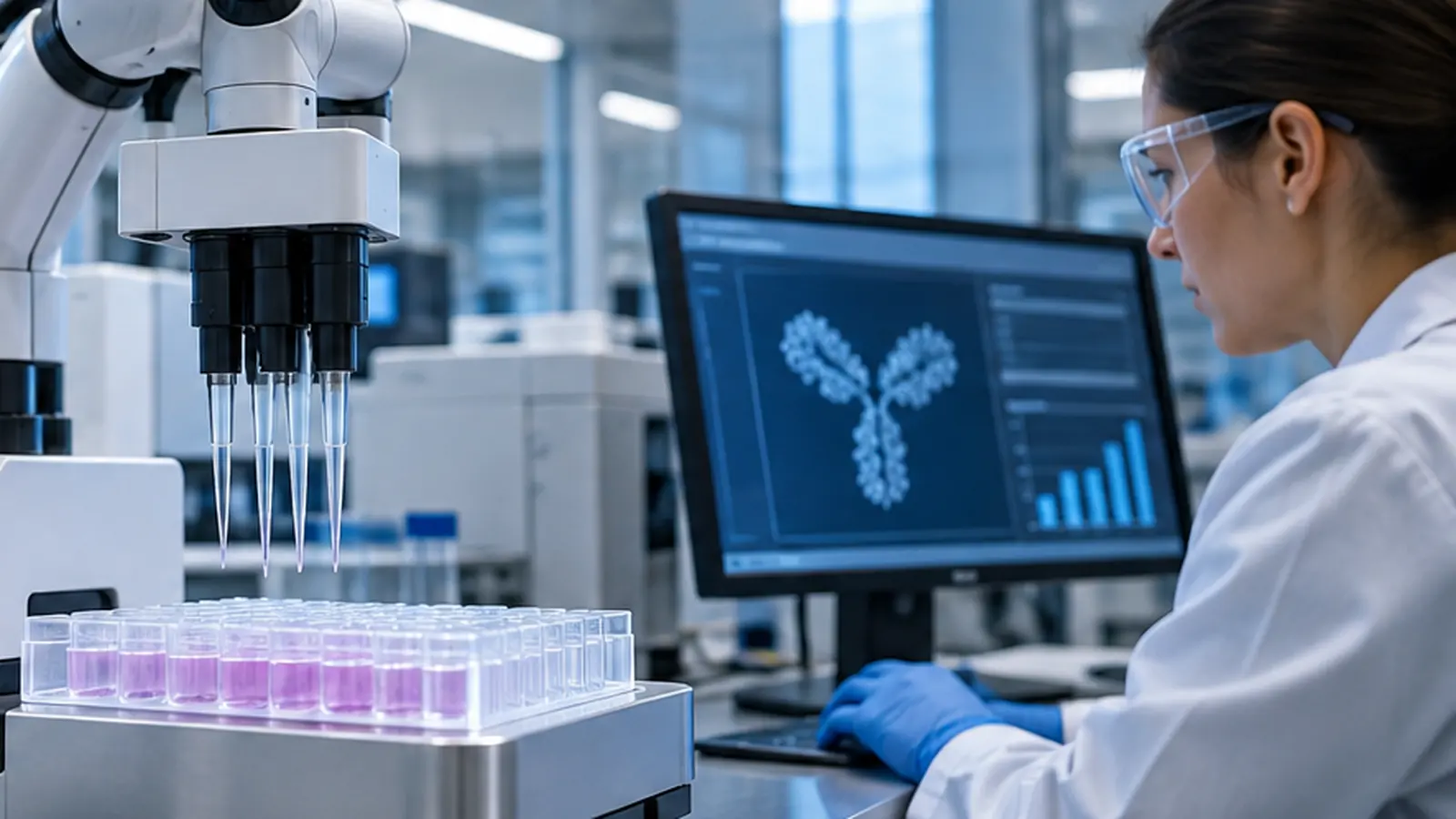
The Genentech test better explains the actual scope. Its researchers connected a pipetting station, a robotic arm, and a microplate reader via MHS to automate a BCA assay, used to measure protein concentration. Claude coordinated the operations and compared its liquid transfers with those performed by a specialist. After testing various parameters, it selected approximately 140 µL/s for water and 10 µL/s for a viscous solution of bovine serum albumin (BSA). These are the values from that experimental setup, not recommended adjustments for other laboratories. The results and method are described in the Genentech case included in Anthropic's announcement.
The same test revealed a failure that could not be fixed by insisting on the software. Initially, the agent used a generic transfer speed for water and BSA; the viscous sample formed bubbles, and the measurements became unreliable. When errors related to foam appeared, it attempted to repeat the operation in the same well and worsened the problem. The researchers had to explain the physical cause and instruct it to use a clean well and reduce mixing cycles. They then incorporated that learning into reusable instructions. This is a valuable example precisely because it shows a real limit of the agent's reasoning, not a flawless automation.
The business takeaway from this trial is clear: MHS allowed for the coordination of different machines and the adjustment of a parameter using experimental data, but it still required expert knowledge when the physical behavior of the liquid changed. This necessitates defining in advance what errors the system can resolve, which require stopping it, and who has the authority to resume it. None of these results allow for a specific promise of reduced times or costs for a small business.
How a Company Would Evaluate This Technology
It wouldn't start by asking how many machines an agent can handle, but rather what specific operation takes time and can be verified without ambiguity. The best candidate is usually a repetitive task, with recordable inputs and outputs and a known recovery procedure.
For example, in a facility with temperature sensors, the first reasonable objective could be to collect readings, detect anomalous values, and prepare an alert. Granting the agent permission to automatically change a thermal system would be a later phase, subject to technical validation and limits independent of the model itself.
For an initial evaluation, I would use this sequence:
- Inventory the equipment. Check the manufacturer, version, control interface, available documentation, and responsible owner.
- Classify the permissions. Separate data reading, simulation, proposal of changes, and execution of physical actions.
- Choose a small process. A verifiable sequence, without relying on ten systems that are not yet integrated.
- Define limits external to the AI. Physical stops, interlocks, emergency stops, service accounts, and human validation when appropriate.
- Measure actual results. Integration time, detected failures, manual interventions, false positives, and recovery capability.
If the company cannot answer these five questions, it does not yet have a sufficient foundation to allow an agent to act.
The Three Tests I Would Require Before Granting Control
Reading Test. The agent must correctly identify the equipment, obtain the expected data, and indicate if the reading is missing or inconsistent. It should not invent values to keep the conversation flowing.
Permission Test. An out-of-scope command must be rejected even if the model considers it useful. This rejection must occur at the device or service control layer, not rely solely on a written instruction in the prompt.
Failure and Recovery Test. Disconnecting a sensor in a safe environment or simulating an error allows us to see if the system stops, alerts, and retains evidence. An automation that only works when everything goes well is not ready to take on critical actions.
These tests are a proposed evaluation, not results obtained by Berraquero.com or certifications of the MHS standard.
What Opportunities Might Exist for Small Businesses
For a small business, the closest value may lie in reducing custom integrations, especially when incorporating a new machine into a known process. If manufacturers end up adopting common interfaces, the company could avoid part of the specific work for each driver.
The savings, if they come, will need to be measured. It is not responsible to promise a percentage of productivity applicable to everyone. Installed machinery, team training, data quality, and regulatory requirements can weigh as heavily as the chosen AI technology.
It is also important to distinguish between two scenarios. A company with a well-documented facility and technical staff will be able to evaluate prototypes sooner. Another that has barely inventoried its hardware will benefit more from first organizing documentation, access, and maintenance. The order of investments changes depending on the situation. For those still defining that starting point, our guides on integrating AI in a small business without losing control and which office processes to automate first serve as references. These are preliminary decisions, easier to validate than putting an agent in charge of physical equipment.
What to Ask the Manufacturer Before the First Test
The technical document of the device is more important than a flashy demonstration. Before allowing an agent to handle it, I would ask the manufacturer for a precise description of the available commands, the accepted ranges, and the expected response to each error. I would also check if data can be queried without granting write permission. A driver compatible with an emerging standard may still require specific adjustments for the machine model.
There are four pieces of evidence to retain from the first trial: the version of the driver used, the permissions granted to the service account, the log of commands sent, and the physical state observed after each operation. Without them, a demonstration that seems satisfactory is difficult to audit when firmware changes or a sensor is replaced.
In the case of multiple coordinated devices, I would add a simple diagram of dependencies. If a robotic arm must wait for a machine to finish, that condition must be verifiable outside the agent's interpretation. The official source from Anthropic describes coordination tests between instruments, but each company will need to validate the protections of its own installation.
Finally, I would request the manual recovery procedure: how to stop the sequence, who can restart it, and how to return to a safe state if the connection is interrupted. This documentation will be more useful during a malfunction than any generic promise of autonomy.
The Risks That a Promotional Video Usually Does Not Show
Physical execution introduces responsibilities distinct from those of a chatbot. An action can consume material, change a measurement, or affect a person's safety. Therefore, the design needs layered controls: minimum permissions, separate testing environments, traceability, alerts, reversibility where possible, and immediate disconnection.
Human supervision also cannot become a mere formality. If the operator receives dozens of confirmations without context, they will end up accepting them mechanically. The approval must show which device will be used, what will change, what risks exist, and what evidence will allow verification of the result.
Another risk is dependence on the supplier. Before adopting an emerging interface, I would ask whether the equipment will continue to function without the model, if there is a manual emergency method, and who maintains the drivers when the manufacturer updates its software.
Is It Wise to Adopt It Now?
For a laboratory or manufacturing manager with specialized staff, MHS may warrant evaluation in a controlled environment. For a small business without that profile, the sensible step is to monitor its evolution and first organize the integration of its equipment. I would not purchase machinery or hire additional services solely because a research standard promises to facilitate connection with agents.
The news is relevant because it shifts a discussion that is often abstract—“AI will do tasks for us”—toward much more concrete issues: what it can read, what it can modify, under what permissions, and how it is demonstrated that it acted correctly. That is the terrain where business automation begins to be evaluable.
Next useful step: read the original announcement from Anthropic and compare its requirements with the actual inventory of devices in the company. If there is no documented programmable interface or a technical person capable of verifying actions, we are not yet facing a deployment project.
Published: 03/11/2026.
This article may have been prepared with the assistance of artificial intelligence tools. View AI policy

You can support the project or share this article in one click. At least this block does something useful.