
Strength Training: What Really Changes Muscle and Performance

If you've ever wondered what the heck makes resistance training improve your strength or increase your muscle size, you're not alone. The ongoing debate of hypertrophy vs strength resistance training is often filled with myths, magic formulas, and gym advice that lacks evidence. Here, we're going to break that down and highlight what truly matters for real changes in your muscle and physical performance.
Heavy Load or More Volume? What Science Says About Strength and Hypertrophy
Let's start with the basics: strength and hypertrophy, while related, are not exactly the same. Strength refers to the ability to generate maximum tension, while hypertrophy is the increase in muscle size. Training for one doesn't always optimize the other.
Current evidence, summarized in over 130 systematic reviews and thousands of participants, confirms that to improve strength, it's essential to lift heavy loads, generally above 80% of your one-repetition maximum (1RM). This intensity forces the muscle to adapt to handle the effort, enhancing neuromuscular capacity and coordination.
On the other hand, hypertrophy responds more to the total volume of work, meaning doing more sets and repetitions (with moderate loads, for example, 60-75% 1RM). Specifically, at least 10 sets per week for a muscle group are recommended, with special attention to the eccentric phase, which is when the muscle lengthens under tension and appears crucial for growth.
And what about training to failure? Surprisingly, training until you can't do another repetition is not essential for seeing significant improvements, and at times it can be counterproductive if overdone, as it limits the ability to maintain quality in training over the long term.
Variables That Don't Change the Game as Much as You Think
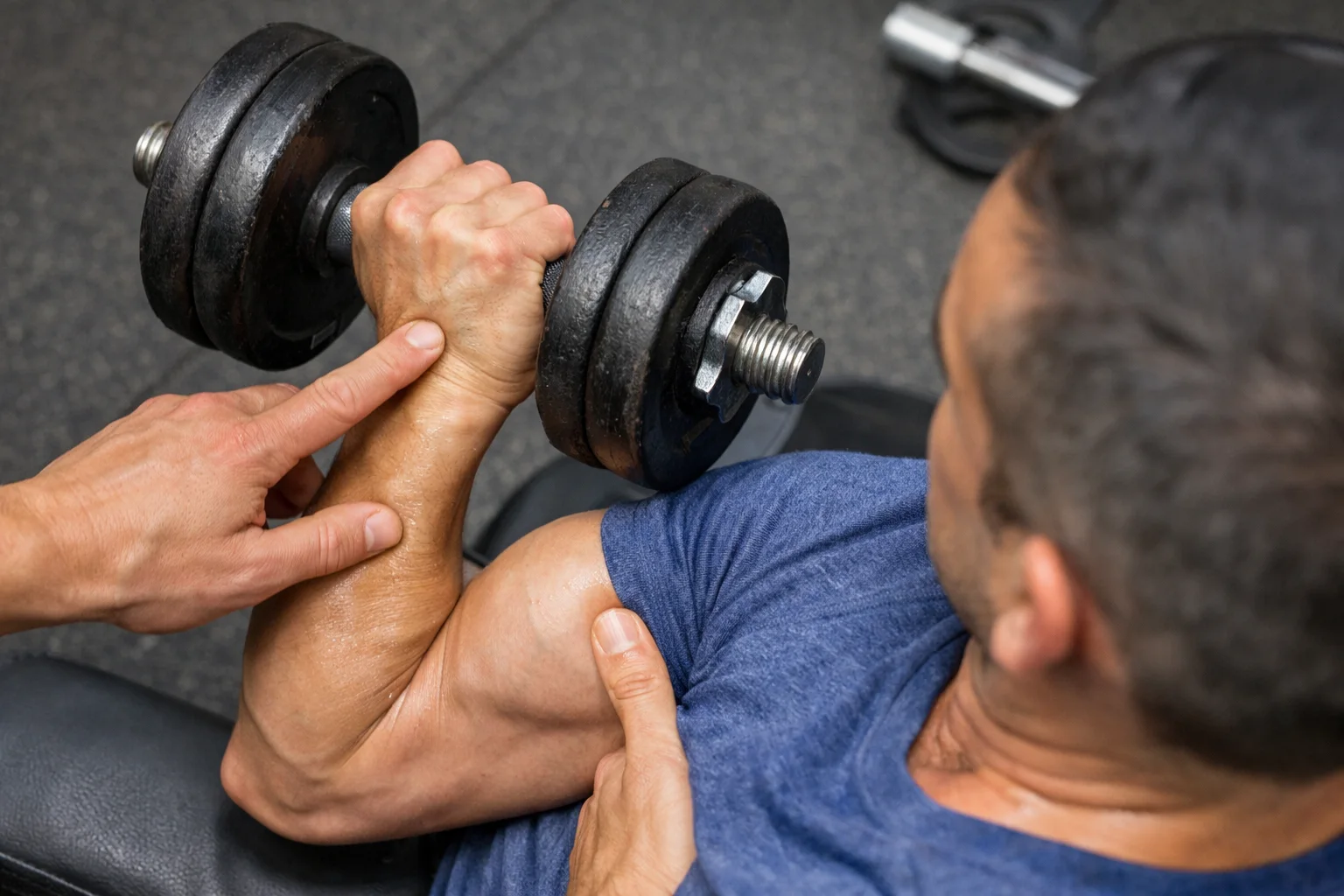
In the training world, there are variables that are marketed as revolutionary, but the evidence doesn't support them as strongly as expected. For example, complex periodization, that system of changing loads and volumes in a very structured way, has not proven to be much better than a well-designed and consistent program for most healthy adults.
The same goes for the type of equipment: machines, free weights, or resistance bands? All work to improve strength and muscle, as long as the key variables of load and volume are respected. There is no miracle device that alone will make you stronger or bigger.
Moreover, aspects like the order of exercises, time under tension, or rest between sets show minor effects that are highly dependent on individual context. In other words, there is no universal recipe, and obsessively focusing on these variables can distract you from what truly matters.
Isn't it curious that, despite so much information, what really makes a difference is quite simple? Perhaps it's time to stop complicating what works.
Resistance Training and Physical Performance: Beyond Muscle
Strength training not only improves the size and capacity of your muscles, but it also has a direct impact on your sports performance and daily functionality. Increasing maximum strength allows you to move heavier loads, but it also enhances power, contraction speed, and muscular endurance.
For example, in sports that require explosiveness, like sprinting or jumping, training with moderate loads and fast movements (power training) is more effective than simply lifting heavy weights slowly. This is where more specific training comes into play, with fast execution speeds in the concentric phase.
Additionally, regular resistance training improves aspects like balance, walking speed, and the ability to perform daily activities that require strength and coordination. This is important not only for athletes but for anyone who wants to maintain a good level of physical performance throughout life.
By the way, did you know that the minimum recommended frequency for strength training is two sessions per week? Beyond that, additional increases in frequency have a marginal effect if not accompanied by adequate volume and load.
What Variables Should You Prioritize in Your Training?
If you want clear results, forget the fluff and focus on these variables:
- Load: For strength, use high weights (≥80% 1RM). For hypertrophy, moderate load with more volume.
- Volume: At least 10 sets per muscle group per week for hypertrophy.
- Frequency: At least two sessions per week per muscle group.
- Full Range of Motion: Important for maximizing adaptations.
- Eccentric Exercise: Including eccentric overload improves muscle growth.
Variables like muscular failure, the structure of sets, or the type of equipment have less impact and can be adjusted according to preferences and availability without fear of losing effectiveness.
The key is constant progression, maintaining enough stimulus for the muscle to adapt. Without that progression, it doesn't matter how many variables you try to manipulate.
Hypertrophy vs Strength Resistance Training? It Depends on Your Goals and Context
In the end, the debate between hypertrophy and strength in resistance training is not black and white. It depends on what you're looking for: if your priority is to lift more weight, the approach will be different than if you're aiming for a bigger and more aesthetic muscle.
But be careful, because both goals complement each other and are not mutually exclusive. A well-structured program can improve both strength and size, although fine-tuning variables can optimize one result or the other.
You also need to consider your prior experience, age, time availability, and preferences. For example, a beginner will see rapid improvements with almost any program that meets the minimum load and volume. In contrast, an advanced individual will need to be more strategic.
And if you just want to improve your sports performance without obsessing over size? Then it's wise to include power training and sport-specific movements, while still maintaining a strength base.
Ultimately, strength training is a powerful tool, but it's not magical or complicated if you know which variables have real evidence behind them.
For those who want to delve deeper into the scientific basis of these recommendations, the official position of the American College of Sports Medicine updated until 2024 is an essential and rigorous reference that debunks many common myths (original source).
Are you ready to stop complicating things and start training with purpose? Strength and hypertrophy are not a mystery, but the result of properly applying a few key variables.
Next step: Hypertrophy and Strength: What is the Real Relationship Between Gaining Muscle and Lifting More.
Published: 07/11/2026.
This article may have been prepared with the assistance of artificial intelligence tools. View AI policy

You can support the project or share this article in one click. At least this block does something useful.