
How to Integrate Artificial Intelligence to Boost Productivity in SMEs Without Losing Control
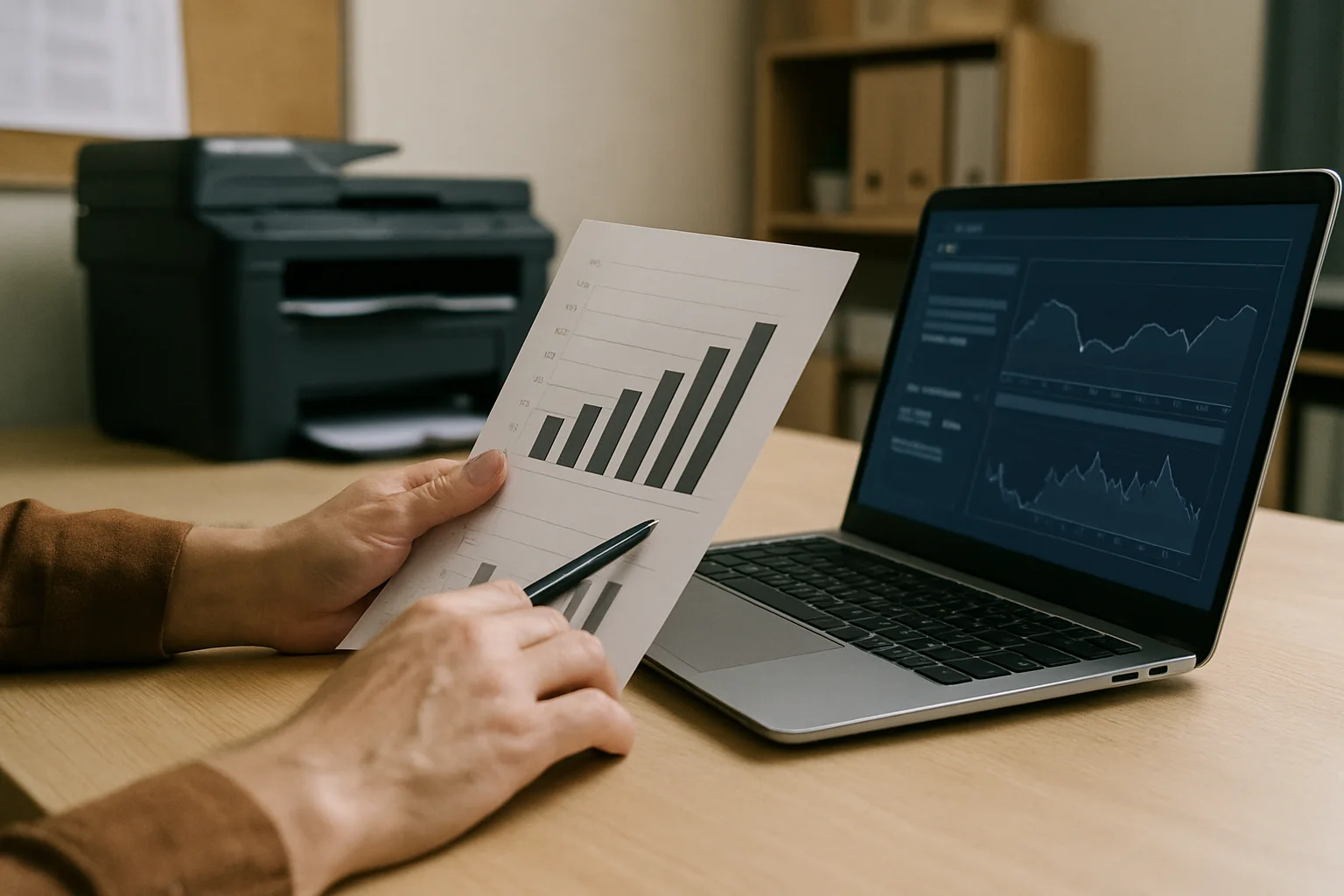
Integrating artificial intelligence in SMEs for productivity is much more than just launching sophisticated software. In reality, it's a balancing act: leveraging what AI offers without relinquishing the helm. It's not about machines taking control, but rather working alongside you, providing data, analysis, and recommendations so that you, as the decision-maker, can make the best choice. In my experience, the real challenge lies in understanding the roles of AI in decision-making and establishing clear governance to ensure effective collaboration between humans and machines.
The Different Roles of AI in Decision-Making: It's Not All About Automation
Artificial intelligence can take on various roles in the production processes of an SME, and not all of them involve the machine making final decisions. According to experts from MIT Sloan, AI can negotiate, train, support, or mediate decisions, but always with human oversight as a guarantee. For example, in a negotiation process with suppliers, AI can analyze large amounts of data to suggest optimal conditions or detect patterns, but the strategic decision must remain human.
This nuance is crucial: AI is not a substitute for judgment or experience. It is a complement that helps accelerate analysis, reduce errors, and avoid human biases, but the ultimate responsibility lies with people. Therefore, integrating artificial intelligence in SMEs for productivity must always be a project that combines automation with control, not a relinquishment of decision-making.
Did you know there are tools like the AI Decision Matrix that evaluate the level of risk and ambiguity to determine when a decision can be automated and when it requires human judgment? These types of frameworks are essential to avoid giving up control blindly.
Governance and Human-AI Collaboration: The Key to Maintaining Control
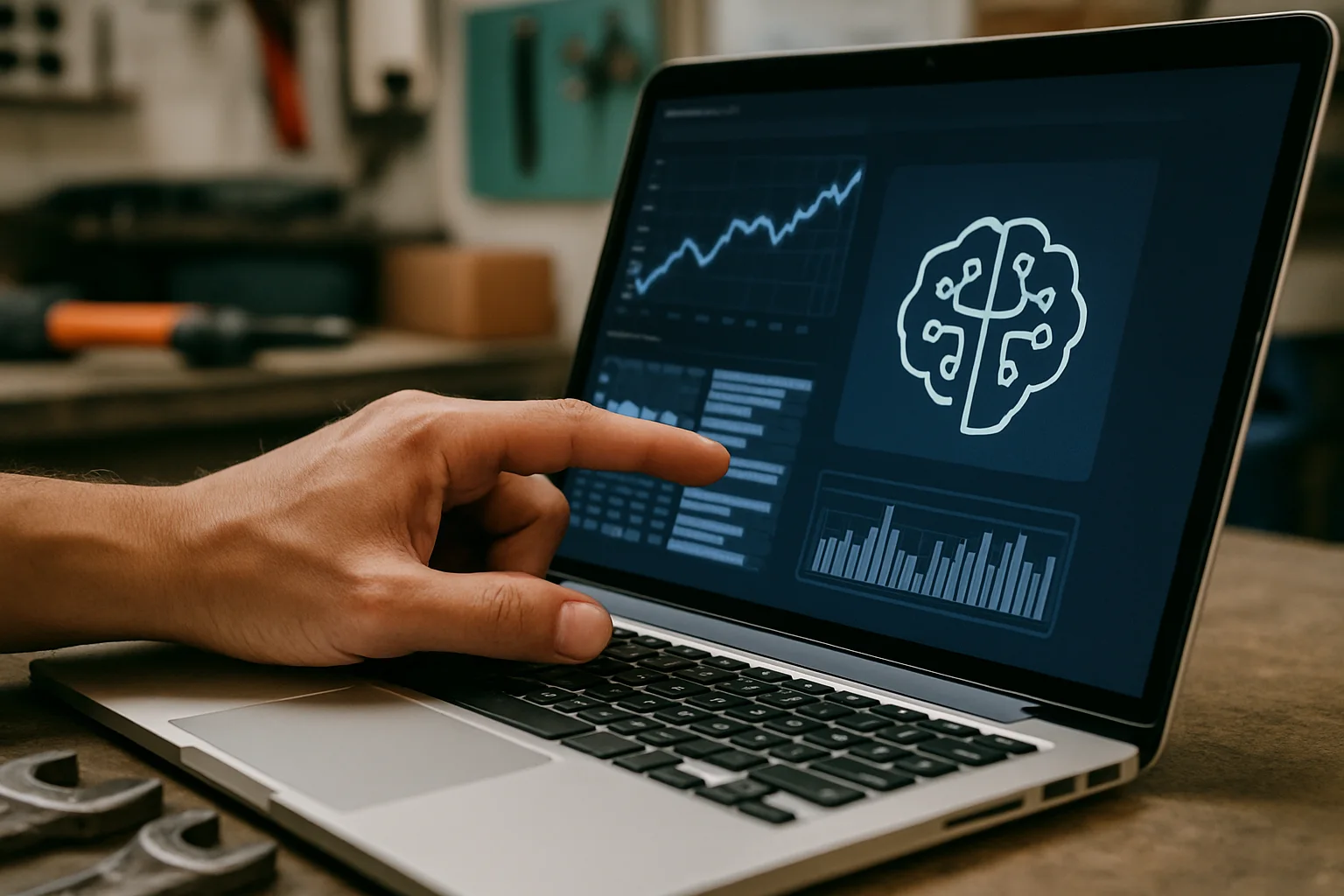
Without a solid governance framework, AI can become a black box. This generates distrust, hard-to-detect errors, and ultimately, productivity losses. In SMEs, where resources for technological management are often limited, it is even more important to define clear rules: what data does AI process? What decisions can it propose? When should a human intervene?
Human-AI collaboration is not a futuristic concept but a practice that should be integrated into daily operations. For instance, if an AI suggests optimizing delivery routes based on historical patterns, the logistics manager must consider external factors (such as exceptional weather conditions or local events) that the machine may not capture. In this way, AI provides speed and accuracy in analysis, while humans contribute context and judgment.
This model of collaboration is also a form of governance: supervising and validating AI recommendations, establishing periodic review processes, and training the team to understand the limitations and strengths of the technology. Without this, integrating artificial intelligence in SMEs for productivity can become more of a risk than an advantage.
Common Mistakes When Integrating AI in SMEs and How to Avoid Them
- Automating Without Defining Clear Objectives: Launching an AI tool without identifying which processes truly need help often leads to confusion and task duplication.
- Leaving AI Unsupervised: Without human controls, AI can make mistakes or perpetuate biases that affect the quality and reputation of the business.
- Ignoring Team Training: Technology doesn't work like magic. Staff must understand what AI does, how to interpret its results, and when to intervene.
- Expecting Immediate Results: Integrating AI is a process that requires continuous adjustments and learning. Benefits come with patience and adaptation.
These mistakes are avoidable if integration is approached with a strategic and realistic vision, focused on human-AI collaboration and active governance. The key is to maintain control while harnessing the power of AI.
How AI Can Enhance Real Productivity Without Reducing Autonomy
In practical terms, AI can accelerate and improve processes that consume a lot of time and resources. For example, in inventory management, a system can analyze sales data, seasonality, and suppliers to suggest when and how much to restock. However, the final decision must consider aspects that AI does not detect, such as marketing campaigns or local incidents. This way, the manager retains control and makes informed decisions.
Another common case is the use of chatbots for customer service. These can resolve basic and frequent inquiries, freeing up the team for more complex tasks. However, human supervision is essential to intervene when the chatbot does not understand the inquiry or when the customer shows frustration. AI acts as the first filter, but humans ensure quality and empathy.
These examples show that integrating artificial intelligence in SMEs for productivity does not mean losing autonomy, but rather enhancing it. AI provides speed and analysis, while humans contribute experience and values.
Reflections to Decide if Your SME is Ready to Successfully Integrate AI
- Have you identified specific processes where AI can add value and not just change for the sake of change?
- Do you have a plan to supervise and validate AI-supported decisions?
- Are you prepared to train your team in collaboration with intelligent technologies?
- Have you considered the risks and established mechanisms to mitigate them?
- Do you have the flexibility to adapt governance and processes as technology and business evolve?
Answering these questions honestly is crucial to ensure that integrating artificial intelligence in SMEs for productivity is not a failed experiment but a real and sustainable competitive advantage.
A Living Process in Constant Evolution
The adoption of AI is not a one-time project or a magic solution. It is a continuous process that requires review, adaptation, and constant learning. Technology advances rapidly, and human-AI collaboration must evolve with it. This involves maintaining a culture open to innovation, but also to criticism and improvement.
Ultimately, integrating artificial intelligence in SMEs to enhance productivity is a challenge worth taking on, as long as it is done with governance, clarity in roles, and respect for human judgment. The final question is simple: do you want AI to help you make better decisions without losing control? If the answer is yes, then you are already on the right path.
Original source: Artificial Intelligence | MIT SloanPublished: 01/10/2026. Content reviewed using experience, authority and trustworthiness criteria (E-E-A-T).
This article may have used artificial intelligence tools to support structure, editing, translation or review. Editorial responsibility and final review remain with Toni Berraquero. View AI policy

You can support the project or share this article in one click. At least this block does something useful.