
How to Ensure Privacy and Security When Integrating AI into Your SME's Productivity
Integrating artificial intelligence into an SME can be a qualitative leap for productivity, but it comes with its risks. Privacy security artificial intelligence SMEs is not just a mantra for the big players; it's a real obligation that affects any business handling sensitive data. The key lies in how to implement this technology without letting security become a bigger issue than the expected benefit.
Privacy and Security in AI: A Real Challenge for SMEs
Artificial intelligence, especially language models and automated systems, processes large amounts of data to learn and provide accurate results. However, this processing can expose confidential information about both the company and its clients. The reality is that many SMEs lack the resources and expertise to properly assess what data they are sharing or how it is stored.
This is not a matter of paranoia, but of facts. Recent research, such as that published by Stanford HAI, warns that AI systems can infer data about users without their awareness and without clear transparency regarding the destination of that information. For example, conversations with chatbots can be used to train future models, something that often goes unnoticed by the SME using them.
If your SME relies on AI for tasks ranging from customer service to data analysis, it's vital to understand that privacy is not an extra, but a pillar. A failure in this area can cost you anything from legal penalties to the loss of your clients' trust, something much harder to regain.
Recommendations and Governance in AI for SMEs: Where to Start?
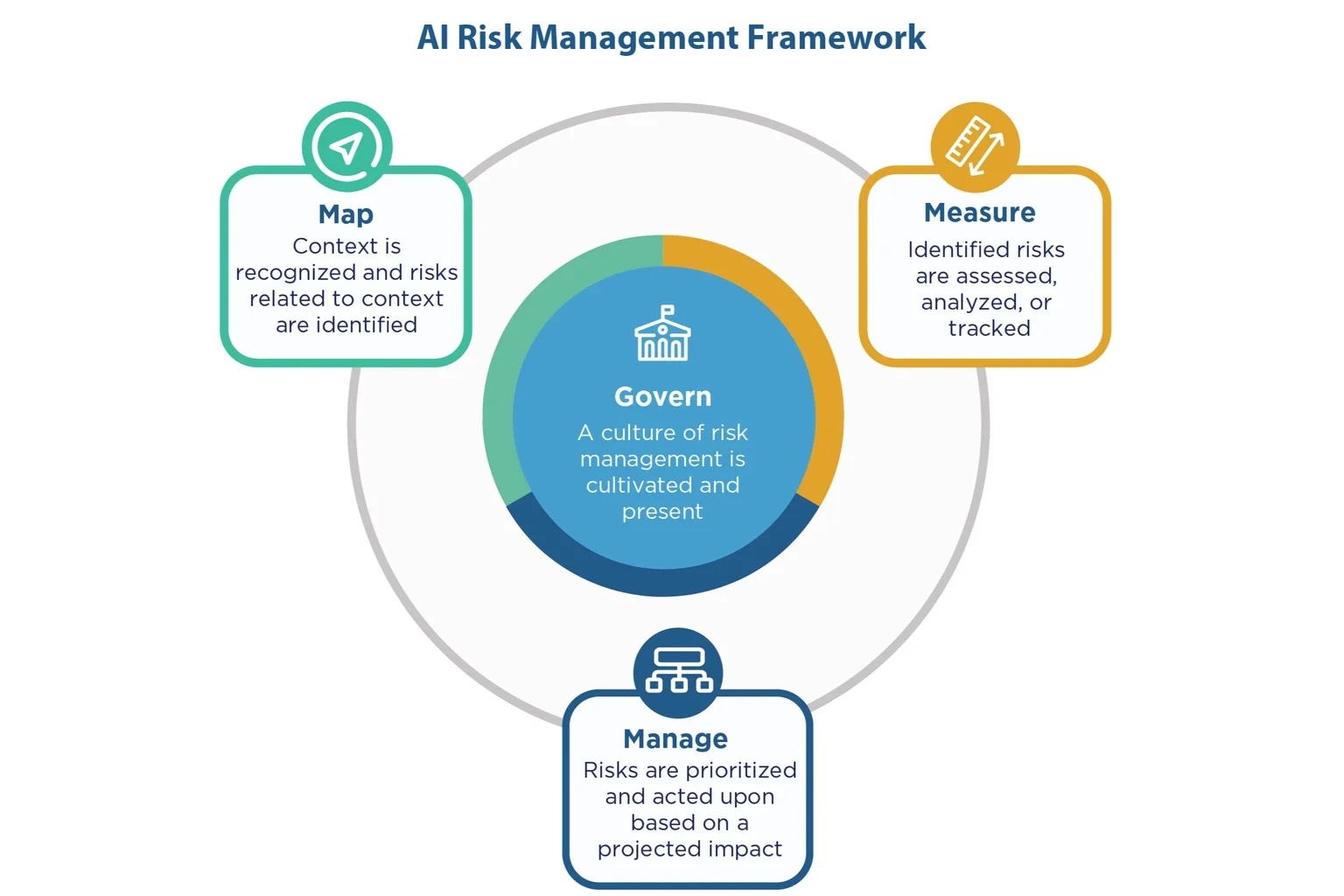
AI governance is not a luxury exclusive to multinationals. Although it may seem like a complex concept, it boils down to establishing clear rules about how artificial intelligence is used in the company, who has access to what data, and how that data is protected.
Stanford HAI highlights the importance of transparency and accountability in the use of AI. For an SME, this can translate into simple yet effective practices: defining what data is collected, for what purposes it is used, and how it is stored. It is also essential to ensure that AI service providers comply with current regulations and offer guarantees regarding data handling.
A common mistake is to blindly trust AI tools without reviewing their privacy policies or limiting access to sensitive information. The recommendation is clear: implement strict access controls and periodically audit systems to detect possible breaches or misuse.
Additionally, it’s wise to train your team in good digital security practices. Technology is only part of the problem; the human factor remains the main vulnerability.
What Specific Risks Should You Watch for When Using AI to Improve Productivity?
In practice, the most common risks when integrating AI into an SME relate to the exposure of personal data, lack of control over data storage and use, and the possibility of suffering cyberattacks that compromise automated systems.
For example, if you use a virtual assistant to manage clients, you should know that conversations may be stored and analyzed beyond your control. This can not only infringe on your clients' privacy but also lead to legal issues if proper information is not provided or explicit consent is not obtained.
Another less visible risk is that AI may learn patterns that compromise security, such as internal information that, if leaked, could facilitate targeted attacks. This is not a theory but a documented possibility that requires vigilance over what data is fed into the systems.
Have you ever thought about what would happen if a failure in the AI system exposes confidential data? At the SME level, this could mean an irreparable blow, especially as privacy regulations become increasingly stringent in Europe and globally.
Keys to Balancing Productivity and Protection
The goal is not to give up on artificial intelligence but to use it wisely. My experience tells me that the best strategy is to adopt a proactive and adaptive approach that includes:
- Pre-evaluation: Before integrating any AI tool, analyze the type of data you will handle and what impacts a failure could have.
- Transparency with your clients: Clearly inform how you use AI and what data you collect. Trust is built on information.
- Security policies: Define protocols to protect information and train the team to comply with them.
- Collaboration with responsible providers: Choose companies committed to privacy and security, and demand audits and certifications.
- Continuous monitoring: Security is not a state but a process. Periodically review systems and adapt measures as threats evolve.
Did you know that, according to recent studies, many AI systems do not meet basic privacy and security expectations? This necessitates staying alert and not blindly trusting developers' promises.
Where Does Legal and Ethical Responsibility Lie?
Responsibility does not rest solely with the AI provider. As an SME, you have a legal and ethical obligation to protect the data you manage, which involves understanding current regulations, such as the GDPR in Europe, and applying best practices recommended by experts.
AI governance also includes understanding ethical risks, such as bias in algorithms or transparency in automated decisions. It's not just a technical issue; your clients' trust depends on using AI responsibly and respectfully.
In this regard, the information and resources provided by Stanford HAI are a good starting point for understanding how to build solid privacy and security policies tailored to each company's needs.
Is It Worth Risking Privacy for Gains in Productivity?
This question does not have a single answer. It depends on the context, the sector, and the type of data you handle. What is certain is that ignoring privacy and security in artificial intelligence for SMEs is a mistake that can be very costly.
Implementing AI without a clear governance plan can create a rebound effect: loss of clients, penalties, and reputational damage that are difficult to reverse. Therefore, the best bet is to integrate AI with a critical and responsible perspective, leveraging its advantages without compromising what is most valuable: trust.
Ultimately, ensuring privacy security artificial intelligence SMEs is not just a technical issue but a matter of common sense and business strategy. Technology should serve to enhance your business, not put it at risk. And you, are you ready to take that step with guarantees?
Original source: Privacy, Safety, Security | Stanford HAI
Cover illustration: NIST Privacy Framework. National Institute of Standards and Technology · NIST AI Risk Management Framework.
Published: 23/11/2026.
This article may have been prepared with the assistance of artificial intelligence tools. View AI policy

You can support the project or share this article in one click. At least this block does something useful.